Iconic: The PJ Redd Story
written interview
•
The Calamity: MJ Russo and the kid who was always too much

He was a hyperactive kid who learned to shrink himself to survive high school. He spent years telling everyone he was going to be a wrestler without actually doing anything about it. It took a fight with his brother using words, not fists to finally light a fire under him. Now MJ Russo is the kind of heel who makes kids cry and grown men want to climb the barricade. He wouldn't have it any other way.
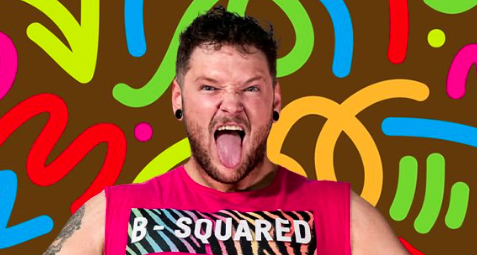
MJ Russo is twenty-seven years old, Italian, hyperactive, and will freely tell you that his entire wrestling career exists because his brother picked a fight with him. He is the longest-reigning MXW Upload Champion, a committed heel who has made children cry and grown men want to climb the barricade, and a person who is — beneath all of that — one of the more genuinely thoughtful performers in the Melbourne indie scene. He sat down with In the Gorilla Position to talk about a brother’s challenge, the hyperactive kid he had to suppress for years, why it’s easier to be hated than loved, and what it means to leave the business better than you found it.
There is a spot in MJ Russo’s process that tells you everything you need to know about how seriously he takes this.
After a match the heel MJ Russo, who has been giving it one hundred percent arsehole for however many minutes the bell runs, well, he goes somewhere quiet. He puts on Mariah Carey. Fantasy, specifically. He breathes through it. He comes down.
Only then does he go out to meet the crowd.
“When I’m doing the match, that is full one hundred percent asshole. But when it’s done MJ was not going to hurt you. He doesn’t have any gripes with you. He’s calm.”
He pauses, grinning.
“And then there’s times when things don’t go the way you want in the ring and you just can’t talk to anyone. You’ve got to stay in your corner, breathe it out, pack your bag, sit in the car, and scream like a wild animal for maybe five, ten minutes.”
He adds, for legal reasons, that this is a joke.
It is not entirely a joke.
The fight that started everything
MJ Russo has been telling people he was going to be a wrestler since he was roughly six years old. His first match was Eddie Guerrero versus Mr. Kennedy and was watched with his brother and a mate, and something clicked. Trampolines. Wrestling DVDs. WrestleMania 23 and 24. The whole pipeline.
Then, for years, nothing happened. He kept saying he was going to do it. He kept not doing it. He was, he says, in a weird space — existing rather than living, not really moving in any direction.
His brother, who is Italian and therefore does not do things by halves, got tired of waiting.
“He basically just said: you said you’re going to do this and you haven’t done it. You’ve been saying it since you were a bloody six years old. When are you going to put your money where your mouth is?”
This is the moment MJ Russo the wrestler was born. Not from a love of the craft, not from a specific match that clicked something on, but from his older brother deciding that enough was enough and saying so loudly.
“That lit a fire under my ass. And I signed up to the Academy and passed the trial.”
He will never tell his brother directly. He is very clear on this.
“I’ll never tell him. But he knows I love him. And he knows I’m thankful for him. Without my brother, there would be no MJ Russo.”
The sponge
He started at the MCW Academy, which has since merged with PCW Academy to form what is now called The Wrestling Academy. From there, he went to EPW’s Perth camp. From there, he found Vicious Pursuit, run by Carlo Cannon, where he trained under Lockie Hendricks, Carlo himself, and DCT. He eventually landed at Relentless, where he now trains under Jake Navarro, Phil, Josh, and Erica Reid, and has been working toward his debut and beyond.
He describes himself, without any false modesty, as a sponge.
“Not one person knows everything. Jake, Phil, Josh, Erica are all four, amazing. I’m still learning a crap tonne from them and I’m going to continue to. But sometimes the way someone else says something can make a whole lot of difference.”
He gives an example. He had been told certain things at Relentless, over and over. He went to Adelaide, trained with the crew at Riot City Wrestling; Chris Basso, Ilya, and others and heard the same things said differently. They landed differently.
“It’s the exact same lesson, but worded different. And sometimes you need that. Can you explain it in more detail? And a fresh voice does that.”
He has recently come back from Adelaide, buzzing with things to bring back to his training partners at Relentless. The night before this conversation he was showing them spots he had picked up. He describes the feeling of that with genuine warmth, in a way that will become relevant later when he talks about what he actually wants his legacy to be.
He also has Japan on the agenda. Not as a vague plan, but a specific one. Thirty days. Two to three weeks of training in one of the dojos. One week for a holiday. He went to Japan earlier this year with a window to train, decided four days wasn’t enough to do it properly, and declined in order to come back and do it right.
“I figured I would come back and go for thirty days and train for about two, three weeks. And then have a week for a holiday.”
He is the kind of person who, when offered an opportunity, asks whether it is worth doing properly before taking it. This is not caution. It is standards.
The debut on the Princes Highway
He technically debuted in a battle royal at an EPW wrestling camp in 2023. He does not really count this. He says he debuted in 2024, because the 2023 appearance was thirty seconds and felt, even at the time, like something that happened a little before he was ready.
“Probably shouldn’t have debuted. Probably wasn’t ready. But it happens.”
The real debut, the one he counts came around the same time as an unexpected booking. The day before he was set to debut for Mayhem, a promoter called Gamby hit him up for Gippsland Pro Wrestling, a Gippsland promotion that had a spot to fill.
“I’ve gone from a battle royal for thirty seconds to my first singles match in Gippsland. Three, four minutes. Same night. I had to drive back and go to my shoot job, which starts at eleven.”
On the way back, somewhere on the Princes Highway, he hit a pothole. He pulled over and changed a tire in the dark, messaging his boss to explain he was going to be late.
“She’s like, how’s the wrestling go? I was like, oh, it went really well. I didn’t die. Clearly.”
A week later he was wrestling again, for Mayhem. His opponent was Nate Hunter.
“He’s a piece of shit, just like me,” he says jokingly, then pauses. “Some of the names coming up on this list.”
The hyperactive kid
Wrestling has taught MJ Russo, more than anything else, that being himself is not a problem to be managed.
For most of his school years, the hyperactive, goofy, loud kid was something he had to dial down. Primary school brought bullying which is the classic penalty for being too much. High school required its own version of self-suppression, learning to take up less space.
“Wrestling’s taught me to be accepting of who I am. Accepting that I am loud, I am hyperactive, I love being goofy. And that’s something I can bring, rather than something I have to hide.”
The character he plays particularly as a heel, is not separate from who he actually is. It is him, but with the dial turned past twelve.
“MJ in the ring is just MJ in real life times one hundred. Granted, probably not a good thing to say considering who I am in the ring.”
He works largely as a heel, and he has found being hated considerably more natural than trying to be loved.
“It’s much easier to be hated than it is to be loved. As a heel, they want to see me get my ass kicked. So when I get one over on the babyface they’re just like fuck this guy.”
He has made children cry. He has made grown men want to climb the barricade. He notes, with great care, that he has never once goaded anyone over the ropes. The rule at Relentless is absolute and he follows it absolutely. But that the reaction comes from what he does inside the ring, not from external provocation.
“It’s just what I’ve done in the ring. But they’re just like, ah.”
He loves it. This is not ambivalent. He genuinely, deeply loves being booed.
“It’s so much fun. Just because of what I’ve done in the ring. I get booed massively at MXW because I walk out of that curtain with a straight face, and then it takes one person to boo, and I just devilishly smile and they all start booing because they’re like, this bald-headed little shit is going to do something.”
He demonstrates the smile. The smile is extremely effective.
The three things
He is his own worst critic. He says this and you believe it immediately, because the way he talks about reviewing his own work is the way someone talks about a process they have thought about carefully because they have had to.
“I let myself watch it as soon as it comes out and I’ll critic it to hell.”
But there is a second watch. Always a second watch. And on the second watch, he forces himself to find three things.
What did I do right? What can I improve on? What got a reaction?
“What I can improve on is: this thing got the reaction I wanted. Why? And then I break it apart and think, okay, if I do this here and slow this down here and then speed it up here, it will flow better and then that will get a reaction.”
He watched his match with Bruno who debuted for Mayhem at the same show, and who MJ will spend a few minutes later singing the praises of and came away initially convinced he had done terribly.
“I haven’t done the three things yet. But there’s some moments where I’m like, okay, this actually got a reaction here. How can I play it out more?”
He had been thinking about it all day at work, he says. Which is how you know he means it when he says the three things.
The framework, he acknowledges, is not just about craft. It is about mental health. About being able to sit with the performance and find something worth keeping rather than drowning in what went wrong.
“We’re slowly improving the mental health.”
He means this more broadly than just the match review process. Wrestling, for him, is an outlet. For everything he spent years having to compress and contain. The ring is where the hyperactive kid gets to be fully himself.
“Can’t imagine without it.”
The Funko Pop
The fans.
He talks about them the way someone talks about people who matter, not the way someone talks about metrics.
There is a regular fan at MXW, a little old lady for whom, by his account, every wrestler on the roster is essentially her husband. And her daughter makes things. Custom trinkets. Handmade keepsakes.
“She made a Funko Pop of me.”
He made a gesture earlier in the conversation suggesting he should have brought it with him to show. He clearly wishes he had.
“Those fans care. It’s real to them in a sense. It means that much to them. So why shouldn’t it mean that much to us?”
And then, the question underneath the question: “If we’re not going out there and giving it all, why even bother?”
He talks about a match early in his career when he was still working face at the time, where an opponent quietly tipped him off about a kid in the crowd and told him he would do something with it. His opponent tossed his shirt, MJ caught it and on the roll-out, passed it to the kid.
“That was honestly a key moment. And I keep thanking him every single time I remember it. Because a lot of moments you forget. But that’s a special moment I need to remember.”
He almost forgot to mention it. The fact that it keeps coming back tells you what it actually meant.
Made it
His definition of having made it has nothing to do with a specific championship or a specific company.
“Being trusted, whether that’s around the world or just in Australia. If a booker can come to me and ask for me because they know I can work, they know I have good promos, they know I can be safe in the ring that’s me making it.”
He names JXT as an example of someone who has made it by this definition. Fun Time Phil. A list of names. All of them trusted by their respective bookers. All of them safe. All of them able to work.
“If I can reach that level, to me that’s making it.”
He adds, as a footnote, that being able to live off wrestling would be great. But it is clearly the footnote, not the definition.
What he wants left behind
When asked what he wants people to say about him when it’s over, he takes a moment.
“That he left the business better than he went into it.”
He is quick to clarify that this is not only about what happens between the bells. It is backstage. It is training. It is passing things on.
“I want to make sure that in the end my legacy is that if you’re kind to others and you respect others, you can go anywhere in this business.”
He catches himself, aware that this sounds slightly at odds with being a heel who makes children cry. He considers whether he actually means it.
He does.
“I don’t find more joy than when I get to teach something or show something to someone in training. I showed the guys yesterday some things I did in Adelaide and my heart was full. It was like, oh, this is awesome, I get to help my mates.”
The previous night, he had been sharing what he picked up at Riot City Wrestling with his training partners at Relentless. Not keeping it for himself. Bringing it back. Spreading it around.
This is the real MJ Russo. The one who puts on Mariah Carey to come down after a match so he can be kind to strangers. The one who remembers a shirt toss to a kid in the crowd as a key moment. The one whose heart fills up when he gets to show his mates something new.
The hundred-percent asshole is the performance. The guy with the full heart is the person.
The advice he wishes he’d had
One piece of advice, back at the beginning.
He does not hesitate.
“Be you. Be the full hyperactive goofy-ass kid. Give it one hundred percent.”
And then the other piece, the one that took longer to learn:
“If you think you’re going slow, you’re not going slow enough.”
He explains. In the ring, the wrestlers experience time differently to the crowd. What feels slow to the performer, a beat held, a moment breathed, a reaction registered is actually the pace the audience needs to absorb what they’re seeing.
“Let the fans register what has happened. Let them register that I just got punched in the face. And then it kind of hurt.”
He wishes he had learned this earlier. Not because it would have made him better faster, but because so much of the early anxiety of wrestling is the fear of the silence that comes when you slow down. If you know the silence is okay and that it’s actually necessary, you stop rushing to fill it.
He is still learning. He says this freely and without embarrassment. He will be going to Pakenham on Saturday to wrestle with Zac Day from Malice, and he is looking forward to it partly because Zac might have something he doesn’t.
“I always look forward to meeting and wrestling with new people because they might have something I don’t have.”
Always be open-minded. Always be growth-minded.
He winces slightly at his own phrasing, as if he has accidentally said something that sounds like a motivational poster.
It sounds like a motivational poster because it is true.
One more thing
Near the end of the conversation, without being asked, he wants to say something about the people coming up around him.
Bruno, who had his debut at Mayhem and was MJ’s opponent for the night.
“That kid is going to go places. God help you if you try to stop him.”
Nate Hunter. Mitch Connors. Matty Hain. Johari.
“They are going to go places if they keep at this. Because god damn it, they’re good.”
And then, the thing underneath the shoutout: “I love the competition of it all. You want to see them succeed, but you also want to succeed with them.”
The hyperactive kid from primary school who got told he was too much has found a place where being too much is exactly right, and he wants to make sure the door stays open for everyone coming in behind him.
That, more than any championship or any booking, is what MJ Russo is building toward.
You can find MJ Russo on Instagram
MJ Russo competes as The Calamity for MXW, Mayhem Pro, and across the Melbourne indie scene. He is the longest-reigning MXW Upload Champion. He trains at Relentless School of Pro Wrestling and will, he says, be going to Japan before the year is out.
If you've read this far, please consider buying me a coffee! It's really expensive here in Melbourne.
comments powered by Disqus