Iconic: The PJ Redd Story

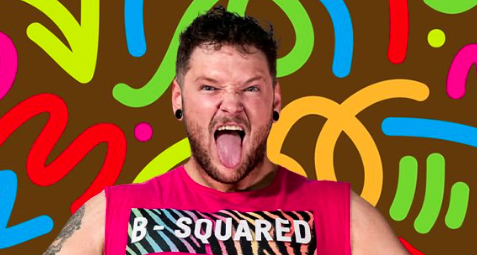
Image credit @themar00481
His grandmother met Andre the Giant at a boat dock in Stony Point. His bullies got him into wrestling. His sales job taught him how to sell t-shirts at indie shows, and a $1,200 investment between two best mates has been quietly turning a profit ever since. PJ Redd — one half of B Squared, Powerhouse Pidge, the self-described spiciest man in sports entertainment — is a lot of things. But more than anything, he’s someone who found his people, found his purpose, and never once thought about leaving.
Four years in and still learning, he sat down to talk about where he came from, what B Squared means, and why the high you get from wrestling is better than any drug on the planet.
It started with the bullies
PJ Redd’s origin story doesn’t begin the way most wrestlers’ do. There was no older sibling with a VHS collection, no pay-per-view party at a mate’s house. It began, of all places, with primary school bullies.
“I was heavily bullied,” he says, without much ceremony about it. “A lot of the kids that made fun of me were wrestling fans. And me trying to fit in was actually trying to gain their interests.”
He wasn’t a fighter by nature and his mum was a spiritual person, all make love not war energy. But watching wrestling became the thing he did to try to connect with the kids around him. They eventually grew out of it. He didn’t.
“For me, it was an escape. Something to go home and be excited for. Not just for the cartoons, but there was this whole world of different characters, this whole canvas of a show that’s getting painted right before your eyes.”
That image of wrestling as a canvas being painted in real time keeps coming back when PJ talks about what drew him in and what keeps him there. It’s the language of someone who doesn’t just enjoy the spectacle but thinks about it structurally, as a craft.
His grandmother fed the obsession too. She used to go to live events back when WCW was running Australian shows, and one day at Stony Point, the literal end of the train line on the Mornington Peninsula, she found herself standing next to Andre the Giant. Possibly Killer Kowalski too, though PJ is careful not to put that in print as confirmed fact.
“You wouldn’t think that someone as big as Andre the Giant would go to some place like Stony Point,” he says. “If you’re going to go to the arsehole end of the world, Stony Point’s about it.”
The Pandemic, the shitty job, and the universe
Wrestling became a real pursuit not through a clean, tidy narrative but through chaos. The pandemic. A dead-end job. A relationship that by any fair description was abusive.
“During the pandemic, I was working a shitty job. I was in a very terrible relationship. I think wrestling, well, the universe was telling me to watch wrestling again.”
He started watching. Then he started training. And from the moment he walked into a gym, things began to shift.
“When I started training, I was very shy and timid, especially around new people. Then after just how incredible people were, how kind and caring everyone was, it was like oh wow, I don’t have to hide myself. I can actually be myself.”
Wrestling, for PJ, wasn’t just a hobby that replaced a bad situation. It was the thing that taught him he was allowed to take up space. That he didn’t have to perform a smaller, quieter version of himself to be accepted. The charisma he would eventually turn into a character had been sitting there all along, waiting for permission.
“I used to work a dead-end job, I was just in a very terrible state in my life. I think like the universe said to me, hey, this is the time.”
He says things like “the universe” and means them. There’s a spiritual quality to how PJ understands his journey which is not supernatural exactly, but a genuine belief that things happen for reasons, that the hard parts were leading somewhere, that wrestling found him at the exact moment it was supposed to.
“I generally believe every aspect of life is there to teach you something.”
B-Squared and Diesel
You can’t talk about PJ Redd without talking about Diesel, his tag partner, his business partner, his best mate since they started wrestling together. B-Squared is the team. But more than a team, it’s a friendship that has held through some of the harder stretches of PJ’s life.
“He was there for me for a lot of things. I had a really abusive partner and he was essentially there for me. If I felt down or didn’t want to come to training, he’d be like, ‘Dude, just come. Get away from everything. Just come.’ He’s always been there to hold me accountable.”
He pauses, then finds exactly the right way to describe it: “He talks shit to your face, but he’s nice behind your back.”
As a team, B-Squared has been more successful than most partnerships that start with a couple of mates in Temu leggings and a shared credit card. They turned a $1,200 investment in t-shirts into a self-sustaining merch operation by reinvesting every dollar, never spending the kitty, slowly building the thing into something that paid for their first proper gear and could potentially fund interstate bookings.
“We basically ended up turning profit each year, which is crazy. It’s just going from investing $1,200 between myself and Diesel to something that’s now bought us free merch and can potentially get us across Australia.”
This is where his day job comes in. PJ is a sales manager in Melbourne and the skills he’s picked up managing teams and closing deals have translated into managing a wrestling business with unusual competence.
“That job actually taught me how to do marketing for wrestling. I see selling t-shirts or just talking to a customer as essentially the same thing. It helped me build more rapport with fans. I always thank my managers because they literally helped me generate figures at wrestling shows. They helped me sell more t-shirts.”
The crossover runs both ways. The discipline and character work of wrestling have made him a better manager. Managing people has made him a better businessman in wrestling. It’s one of those feedback loops that looks like luck from the outside but is actually just someone paying attention.
The character: dialled up to 11
B-Squared’s characters didn’t emerge from a character workshop or a booker’s notebook. They emerged from two blokes deciding to be themselves, but louder.
“The best way to describe not just us, but B Squared in general, it’s basically us dialled up to 11. What you’re getting is us.”
PJ credits a switch that flipped somewhere around year nine. This was the year he decided that being shy and small wasn’t working and that being a charismatic, slightly shit-stirring version of himself might work better. It did. And that energy, transferred into a wrestling character, became PJ Redd.
“I’m all for having a joke, all for having fun. But when you’ve got to throw down, you’ve got to throw down. That’s always been me as a person anyway. I’m a very short and laid-back person, but if you rub me up the wrong way, I’ll turn around and be like, all right, what’s going on? Do we have a problem?”
He’s primarily worked as a face throughout his career and it suits him, because the crowd tends to follow warmth and charisma when they’re genuine. But recently he’s begun experimenting with a heel character at one of the other Melbourne promotions: Powerhouse Pete, inspired, of all people, by Bane from The Dark Knight Rises. Balaclava, jacket, the energy of someone who is absolutely about to rob you of expecting the face to win.
“I thought, who could I base this character on that hasn’t been done before? And I thought of Bane from Dark Knight Rises without the mask. So I started coming out with a balaclava. My Powerhouse Pete’s initial thought is: I’m about to rob you. I’m about to rob you from watching a face win.”
He loves the new canvas. But he’s clear where his heart sits. “I’m still a face at heart. Like, you can’t get rid of that.”
Working the room
One of the clearest signs of a wrestler who has thought seriously about their craft is how they talk about the crowd. For PJ, crowd engagement isn’t an optional feature of a good match. It’s the whole point.
“I genuinely believe a match needs crowd engagement. Otherwise, what’s the point? If you’re there to literally just have a match and not involve the crowd? That’s a spit in the face to the crowd.”
His approach is to hook them early and let them carry the rest. Get them in the first thirty seconds, acknowledge them, make them feel like they’re part of it. After that, the reactions come naturally and you very rarely have to manufacture them.
“You rarely see me in a match actually start clapping, because the crowd knows when to clap. I just start clapping with them or stamping my feet because the crowd do it. You engage them at the start, acknowledge them, and then they’re going to come to you. And then you get natural reactions the whole time.”
He’s also sharp enough to know the limits of any single night. A crowd can be with you when the booker isn’t, and vice versa. He’s had matches he thought were terrible where the bookers told him it was great, and nights where he felt locked in but the crowd was quiet. Both are information. Neither is the whole picture.
“I ask for feedback every match. I go straight to the booker or the owner and say, how was the match? Any feedback? I take it like a second job. You’ve just got to be professional.”
The Tommy Hellfire night
There are matches that show you what’s possible. For PJ, one of those was a singles match with Tommy Hellfire at PCW.
“The first thing we did before we went out was we basically locked up. We shoulder bumped each other, and it was like, “Oh wow!” If we have chemistry just from doing that, we’re going to go out there and have a great match.”
They did. PJ still calls it one of his favourite singles matches. It’s also the match that clarified something for him about the difference between chemistry that has to be built and chemistry that’s just there. Some opponents, you work with the whole night. Some opponents, you feel it in a shoulder bump in the locker room.
He has since mostly committed to preparing matches thoroughly rather than working on the fly. A lesson he learned the hard way when an attempt at improv with Ross Winter resulted in an accidentally kneed rib and PJ spending the rest of the match oscillating between character and a genuine, horrified version of himself.
“If I really hurt someone, I’m not PJ anymore. I’m me. I’m like, oh my God, are you OK? Can I get you anything? Do you need anything? Especially in the ring when you transition from your character self to you because you’ve just injured someone. It’s like, shit, I feel naked.”
The anecdote is funny but the instinct behind it is serious. He holds himself to a high standard of care for the people he works with, and the moment that standard was compromised even accidentally, it stayed with him.
The rubber match
The highest PJ has ever felt in wrestling was not when he won a belt or had his hand raised. It was after the rubber match against the Black Diamonds at Christmas Chaos.
“The boys felt like, this is the best match we’ve had. Thank you guys. We had the owners come up to us and say that was incredible, you guys should be really proud of that. No feedback. That was crazy.”
Then came something rarer still. A wrestler approached them. Someone who had been sceptical and said simply: “I’m going to be honest with you guys. I didn’t really think much of yous when I first started. But you’ve literally changed my perspective just from that match alone.”
And then, leaving the venue at PCW, fans who had been waiting outside just to see them.
“People like ‘PJ! We’ve been waiting to see you. Can we get a photo with you and Diesel?’ That’s crazy. That’s probably the highest I’ve ever felt in a moment.”
He describes the feeling as a high better than any drug on the planet. And listening to him describe that night, you believe it.
The five-year hump
A lot of wrestlers hit a wall around the five-year mark. The grind catches up, the bookings plateau, the question of why you’re still taking bumps for middling money becomes harder to answer. PJ has never felt it.
“I’ve never really wanted to walk away. There’s been moments in life where wrestling has tested me. But never have I once thought, fuck, I should just burn my boots and piss off.”
He’s navigating a real balancing act at the moment. He has a new management role at work, wrestling commitments and a relationship to maintain. The scales tip and readjust constantly. He’s honest that a break might come eventually, that balance is something he’s still figuring out. But the love hasn’t wavered.
“I just love wrestling, man. I don’t care who I wrestle as long as I’m having fun. If you can find something you enjoy, there’s no reason to stop doing it.”
He’s also at an interesting age and stage in the Melbourne scene where he’s experienced enough to be teaching fundamentals and early enough in his career that the ceiling hasn’t revealed itself yet. He’s already been interstate in his rookie year. He watches tape like a student, hunting for moves nobody else uses. The running Suplex is one result. He’s looking for more.
“We have this saying at work: make the calls and find the gold. When I’m watching wrestling, I’m trying to find that gold nugget. That move that I want to use that no one else does.”
Iconic
Ask PJ Redd what he wants people to say about him when it’s all over and he takes a long pause. It’s the kind of question that tends to either get a stock answer or a real one. He gives the real one.
One word: iconic.
“Not even just about B-Squared. I just want people to see PJ Redd as iconic. The guy that went from being this sad person to one who changed his whole life to basically do whatever he can to be happier and then made a career out of it. Whether I make it or not.”
He doesn’t say it with bravado. He says it with the quiet conviction of someone who has already come a long way from where they started. From the bullied kid trying to fit in, to the abusive relationship and the dead-end job, to the pandemic, the training gym, the t-shirt kitty, the shoulder bump that told him they were going to have a great match.
“I want people to see me as iconic. A beacon for if you keep pushing hard, you keep working hard, and that’s going to happen if you have that work ethic.”
It’s a word that sounds like a big call until you understand the arc it represents. For PJ Redd, iconic isn’t about the lights and the crowds and the contracts although he’d take them. It’s about proving, on his own terms, that the kid from Stony Point’s extended family who found wrestling through bullies and got through the bad years because his best mate kept telling him to just come to training and that kid made something of himself.
He already has.
PJ Redd competes across the Melbourne indie wrestling circuit as one half of B Squared alongside Diesel. He can also be found, depending on the promotion, as Powerhouse Pete — in a balaclava, about to rob you.
You can find PJ Redd on Instagram
If you've read this far, please consider buying me a coffee! It's really expensive here in Melbourne.
comments powered by Disqus