New Horizon Pro Wrestling
Inside the mind of Korvus: Building a villain, one Perth show at a time

Image credit: @katogenic
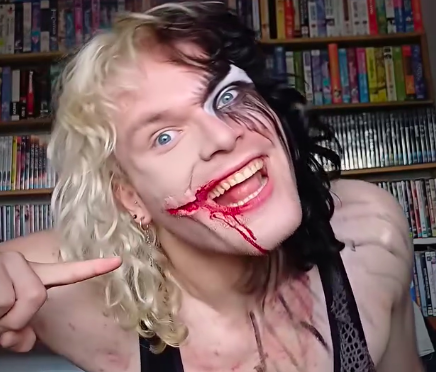
Syd Parker admits he usually tries to keep the mystery. He hasn’t done many interviews (he can’t remember the last podcast he appeared on) and there’s a deliberate quality to that. The Jurassic Punk, the character he’s been playing for the better part of eighteen years, works partly because you don’t know too much about the man behind it. But tonight he’s holding court, and once he starts talking about wrestling, it becomes clear pretty quickly that “keeping the mystery” has its limits. He has things to say.
He’s thirty-four years old, has wrestled in every state and territory in Australia, spent a year and a half training in England with the Knight family, and these days books and performs for Lucha Fantástica in Melbourne. He’s been frog-splashed by Rob Van Dam. He once vomited into Juventud Guerrera’s mouth. He wore Ultimo Dragon’s cape. The résumé is genuinely remarkable, and yet when you ask him where he wants to take things next, the answer is almost disarmingly straightforward. “I’d love to go everywhere and wrestle, to be honest,” he says. “That was always the dream. Live off wrestling and travel the world wrestling.”
He’s been chasing that dream since he was twelve years old.
The first wrestling Syd ever saw was WCW, on what he thinks was an Optus channel in 1999 or 2000. The image that lodged itself most firmly was Goldberg. “I get why everyone has their opinions on him,” he says, “but he was so fun to watch. Just that aura. I love that aura.” He traces a straight line from Goldberg to Nick Gage’s run on top of GCW years later with the same quality in both of them, that sense of something barely contained, a crowd that doesn’t know exactly what’s about to happen but knows it’s going to matter. That’s the wrestling Syd responds to. That’s the wrestling he tries to make.
The moment he said it out loud for the first time came at a friend’s thirteenth birthday party. He was twelve, the friend’s mum was going around with a camera asking everyone what they wanted to be, and when she got to Syd, he said Pro Wrestler. “I don’t want to say I decided then,” he offers, “but that was the first time I remember answering that.” He started training in 2008 in New South Wales. He was sixteen. He’s been at it ever since.
Ask him what the hardest lesson training taught him and he doesn’t reach for a wrestling answer. He sits with the question for a moment. “It’s not even really to do with wrestling,” he says, “because that stuff just comes with experience.” What he lands on is something simpler and more human: don’t get caught up in other people’s dramas. Support people, help people, but don’t absorb their stuff as your own. It’s a lesson he had to learn the slow way, through his twenties, in the cramped and politically charged world of independent wrestling.
The subject leads somewhere more interesting: what has wrestling taught him about himself? He was sixteen when he started training. That means almost everything he knows about who he is as an adult, he learned inside or alongside the business. “Anything I know about myself is through that, I suppose,” he says.
Which raises the question of where the character ends and the person begins. He’s thought about this a lot. He teaches it, in fact, to his own students. “The best wrestling character,” he says, “is usually the part of you that, if you let it out in regular society, would get you shunned.” The Jurassic Punk is aggressive, vengeful, violent, almost sadistic. Those parts genuinely exist in Syd Parker. The character isn’t a costume he pulls on. It’s him with the volume cranked.
“I feel like Syd is maybe the part of me that would have to go to war,” he says, “or hunt to feed my family. These are all of these things that my ancestors would have had to do. That still exists within my makeup. Thankfully.” He pauses. “It’s better to be a warrior in a garden than a gardener at war.”
The trick, he learned, was to stop thinking of that part of himself as a monster. “I changed my perspective to: that’s not a monster. That’s just you as a little kid.” A kid who hasn’t been taught to moderate yet, who reacts to everything with his whole body. If you treat that kid with love and give him somewhere to go, he stops appearing at inconvenient moments. He’s got his outlet.
One of Syd’s students didn’t finish high school because he got so angry one day that he spear-tackled his teacher into a wall. He and his mum named that part of him and it’s where his character’s name comes from. “And that’s that part of you,” Syd says, “that if you don’t have an outlet for it, it’s just going to come out. I’ve been playing a lot of Pokémon lately and realise that it’s not going to stay in the Pokéball.” He laughs. “It’s going to come out when you don’t want it to.”
By Syd’s account, the student is one of the sweetest, most generous students he’s ever had. The character has somewhere to live. “I went from teaching him how to take his first bump to wrestling on shows with him,” Syd says. “He could end up being my legacy.” He seems genuinely moved by this, and genuinely careful not to take too much credit for it. “I say I’m proud not because of how I’ve helped him, but because I get to be a part of his journey.”
This is the logic that underpins what Syd does in the ring too. Wrestling, at its best, gives the audience the same release it gives the wrestler. “Where else can you go and hurl vicious abuse at malevolent characters?” he asks. “You can’t do that at a sports game. It’s frowned upon. At wrestling, if you’re the heel and you’re doing your job right it’s encouraged.” He loves being the heel for exactly this reason. “Making people hate you feels realer than making people love you.” The crowd isn’t being manipulated into a feeling. They’re being handed a vessel for a feeling that was already there.
He’s been Donald Trump at Lucha Fantástica and he plays Texas Ranger, a shamelessly awful character with a fake American accent, deporting luchadors, showing his backside, getting walloped. He’s had eight hundred people chanting things at him that couldn’t be broadcast anywhere respectable. “I got to give them that cathartic release,” he says. “The people are so appreciative afterwards because they had so much fun letting that out of their system. Because it’s in there. It’s festering.”
That’s why Steve Austin worked so perfectly in the nineties, he argues. People hated corporations. The anti-establishment mood was in the air. Austin was the vessel. “There was such a perfect storm for that character. It wouldn’t have worked the same way in the eighties.” And it can’t quite be replicated now, he thinks, because any top star in mainstream wrestling is, by definition, working for a massive corporate entity. “No top WWE star can be a babyface for the masses, because they’re part of that corporation.” Even CM Punk, Syd admits as maybe his favourite of all time, runs into this wall. At the independent level, meanwhile, too many wrestlers are hedging their bets, watching what they say in case it affects a future contract. The mirror that wrestling should hold up to society is blurry right now. Lucha Fantástica, with its satirical Trump and Musk characters, is one of the places doing it honestly. But it’s rarer than it should be.
The conversation turns to how he watches wrestling now, eighteen years in. It’s genuinely hard, he admits, not to fall into analysis mode. You can’t help but to watch without thinking I wouldn’t have done it like that. He’s found an unexpected solution in AAA, the Mexican promotion that puts its shows on YouTube. “I can understand lucha style, but it’s not something I know the intricacies of,” he explains. It keeps him as a fan rather than a critic. It’s the same reason he puts on jazz music when he’s studying. “I don’t really know what’s going to happen next in it. Whereas punk music or pop music I might sing along and it’ll distract me.” Lucha Underground’s first three seasons are some of his favourite wrestling ever. “They almost said: fuck the WWE! This is what wrestling is.” And he loves that. Wrestling should be naughty. It should be raw. “That’s sort of one of the things it can offer that other mediums can’t.”
At Lucha Fantástica specifically, where he does the booking, he gives his wrestlers a framework. Letting them know who’s winning, this is what I need and then lets them get him there. He doesn’t want to micromanage, because he doesn’t want to be micromanaged. “Good wrestling is a language,” he says. “The point of language is to be understood, and I think letting wrestlers say it in their own words is really important.” He uses the analogy of a rap track: there’s the main artist, and then there’s the feature. “I come up with a lot of the ideas and the structure, and the opponent is the feature.” Being the heel suits this, because the heel gets to make the babyface look good.
His most-wrestled opponent is JXT, and the reason is simple: they’re different in the right ways. “Sometimes Syd’s a bit too edgy, and sometimes JXT isn’t quite edgy enough, and when we come together we bring the little bits out of each other.” They had a dog collar match last year that Syd rates as one of his favourite matches ever. He came into the planning with an idea. He’d brought a big railroad spike, and thought maybe he could use it on JXT. “And [JXT] said, nah, it’s probably too much because there are kids in the audience. And he was right. We absolutely didn’t need it.” Restraint. The match was better for it.
He invokes Shawn Michaels on what makes a good match: give the fans what they expect, and then something a little bit special. “I don’t know how I can give fans something special if I’ve already got them expecting a death match.” The Cactus Jack example follows naturally. On paper, Cactus versus Sabu sounds incredible; in practice it almost undoes itself, because the expectation is too high to exceed. Cactus Jack versus Edge was the better match. The foil makes the fight.
The thing most fans probably don’t think about, he says, is just how much of the job is listening. Constantly reading the audience, asking where the energy is sitting, whether it’s crested, whether it needs to breathe. “Wrestling is like musical theatre,” he says it’s a line he uses when he’s teaching “but the instrument you’re playing is the audience.” When the audience comes to a Lucha Fantástica show at Collingwood Town Hall, they’re not there to evaluate the wrestling. They’re there to be part of something. They react to shoulder tackles and body slams. Someone passed out in the ring at one of those shows not long ago. A wrestler on his first appearance, dehydrated, had eaten some bad chicken. “But I think the main thing,” Syd says, “was that he just wasn’t prepared for the energy of eight hundred and fifty people going crazy.”
He heard a quote once that he says he’ll probably butcher, but the gist was: the closest the speaker had ever come to a religious experience was a Radiohead concert. “I feel that when I wrestle at Lucha Fantástica,” he says. “We have the audience hard up against the ring, no guardrails, everyone standing, Chico tipping tequila out of the ring into people’s faces. Everyone’s energy is pointed at you. It feels religious.” Every person in that room has had a different day, walked in carrying different things, and for the duration of the show all of it collapses into a shared experience. “It’s moving,” he says simply. “It’s a beautiful thing.”
There’s a specific kind of validation he loves, and it says something about what he’s actually chasing. After a show where he’s been in the main event and lost, fans will come up to him at the merch table and say: congratulations on the big win. “They’re so inside the experience, they’re part of it,” he says. “The audience forgets what you did, your name, the order of the matches. They just remember how you made them feel.” That’s the only thing that matters.
You’d think, given all of this, that there’d have been a moment where he considered walking away. A serious injury, a brutal run of bad shows, a period where the math just didn’t add up. There’s the pre-COVID clothesline knockout when he was out for four or five minutes, which he suspects has done things to his mental health over time. A fracture near the top of his shin from a badly-landed spot, the knee filling with fluid. He once got sandwiched between his motorbike and a car when he was working as a motorcycle postie. His shoulder blades will hurt in the cold for the rest of his life. “Touch wood,” he says, “I haven’t had any really terrible injuries.” His neck and spine are somehow okay. His knees have survived.
But even during COVID, when there were nearly two years between matches, there was never a moment where he thought: maybe something else. “I just wanted to go back,” he says. What there was, during the six weeks he was out after hernia surgery recently, was a hollowness. “I just felt a little bit empty because I couldn’t express myself.” He pauses. “Wrestling’s a journey to me. It’s all about the journey. The destination is the problem. Once you get there, you’ve got to find a new destination.”
Since he was twelve, everything he’s done has been pointed at wrestling. Moving to England to train. Coming back and choosing Melbourne over New South Wales because the scene was bigger. “For better or worse,” he says, “I’ve done things with the idea of: this will help me with wrestling.” He couldn’t now tell you what he would do instead. He hasn’t bothered to think about it. Even when the time comes that he can’t perform anymore, he’ll still be booking, producing, teaching. The promoting side sounds like torture. He’s been around enough promoters on show day to know, but everything else is a blast.
Success, he says, isn’t a WWE contract or main-eventing WrestleMania. Those those things would probably lead to the actual dream, which is far simpler: support his family healthily from wrestling. Live from it. Travel doing it. “It’s such a fluid idea of a dream,” he says, “that I’ve never felt turned off by where I am.” The journey is what there is.
When asked what he wants people to say when it’s all over, he thinks about this carefully. There’s a Wonder Years song he loves called I Just Want to Sell Out My Funeral. He loves the idea in that title. A room full of people who actually want to be there. “I’d like to be remembered as someone who helped people find joy,” he says. Not as a good wrestler because he has enough confidence in his own work that he doesn’t need external validation for that. Joy specifically. His grandmother on his dad’s side was named Joy. He thinks about that.
“It’s easy and cheap to be cynical,” he says. “To find joy? That takes a skill.” He’s been working on that skill deliberately in recent years. Getting passionate about something, he’s noticed, can make you lose yourself in the pursuit of it, forgetting to stop and smell the roses, pat the cat, notice what’s good right now. “The human condition is to be anxious about things coming up or depressed about things that have happened. But if you can just stop and find joy, joy is everywhere.”
“I’d just like to be remembered.”
He circles back to that student. “I say I’m proud not because of how I’ve helped him, but because I get to be part of his journey.” The kid got him a LEGO Tyrannosaurus Rex for Christmas: a proper one, an expensive one, the kind where someone has clearly gone to some effort. Syd found out after the fact that it cost too much. He is, he says, nothing but grateful. “I went from teaching him how to take his first bump to wrestling on shows with him.” He looks forward to the day they team up. “If we do, we’re basically Banjo-Kazooie,” he says, and laughs.
Then he gets serious again, or as serious as he gets. “Find something that it’s a joy to sacrifice for,” he says. “That’s the key to real success. You don’t look at the reward, because if you do, you’ll miss out on all the rewards you’re going to get along the way.” He thinks for a second. “We’ve got to suffer in life. Find something that it’s a joy to suffer for. That’s the secret to a good life.”
He means it. You can tell, because it’s the same thing he says with his whole body every time he goes through that curtain.
Syd Parker The Jurassic Punk, wrestles for Lucha Fantástica in Melbourne, where he also books. He trains and teaches professional wrestlers across Australia.
If you've read this far, please consider buying me a coffee! It's really expensive here in Melbourne.
comments powered by Disqus