MXW
Ten matches deep: A conversation with Mylo Marinko

Image credit: @themar00481
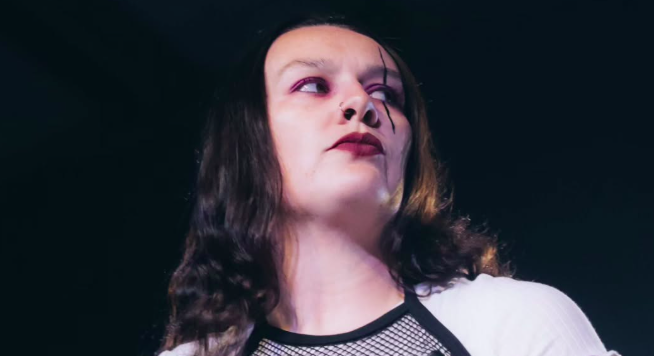
Nova Nicholls doesn’t chew gum. She just looks like she does.
“I’ve noticed it when I watch my promos back,” she laughs. “I’m like, why the fuck are you chewing invisible gum? Keep your mouth still.”
It’s a small, silly admission, but it’s a good entry point into who Nova Nicholls actually is once the tape stops rolling and the character goes back in the box. Eight years into a career that’s taken her through backyard rings, four different Melbourne-area promotions, a five-year burnout that nearly ended everything, and a full heel turn she wasn’t sure the crowd would ever let her have. Nova Nicholls has thought about almost none of it as hard as she’s thought about who she is underneath it.
Like a lot of Australian fans her age, Nicholls grew up thinking wrestling started and stopped with the WWE and TNA. She had Foxtel on a loop, Raw and Smackdown, no idea that a domestic indie scene even existed. “I was one of those naive people that thought WWE was it,” she says.
That changed because of a message from a high school friend, who’s now one of the co-owners of Malice, and was starting a new promotion and remembered her talking about being a wrestling fan. The timing wasn’t right the first time he asked; she was playing netball four nights a week and in a relationship. It became right the moment both of those things ended.
I was like, I’m looking for something to do, because I can’t just sit here and be depressed all the time.
She messaged him back, asked if they were still looking for girls, and turned up to find the ring set up in someone’s backyard, the genuinely humble early days of Adrenaline Professional Wrestling. “There’s something about it that said this was the place I had to be. I just never stopped from there.”
She pauses on the phrase, then commits to it: “It’s almost like wrestling found me. I didn’t find it. It’s like I knew it needed me.”
For most of her career, Nicholls was a face and not a coy one. “I’d been the young and plucky up-and-comer. I’d been the good guy that fought for everything that was right. I’d been the top of the food chain.” Eventually, that started to feel like a ceiling rather than a home. “I was kind of getting bored of being a face. I was worried I’d run my course with it.”
So she turned heel. First at Adrenaline, where the problem wasn’t heat, it was the total absence of it. The crowd had spent years as her supporters and simply refused to let go. “I would do something heinous and they’d be like, oh, she’s right though, we can’t boo her. I’d be working my ass off to try and get booed and they’d be like, nah, we stand with Nova, she’s got a reason.”
The character she landed on wasn’t cartoon arrogance it was grievance. “I’m tired of being overlooked, underestimated and disrespected,” is how she sums up the pitch, and it’s one she’s carried, with different shading, across all four promotions she currently works. At the Cudas in Alpha, and similarly at Dominion, it plays cocky, “yeah, I’m the best.” At Adrenaline and Malice, it’s angrier, rooted in a reason. “It’s been nice to try and see what I can do besides just go out there and high five everyone.”
What finally made the heel work, she says, wasn’t a better strategy. It was letting go of needing the room to like her. “I think that’s my biggest thing. I was like, I don’t want them to hate me. But now I’m like, Nova and who I am behind Nova are two different people. If they hate Nova, they hate Nova. That’s kind of the point of a heel.”
She’s also arrived at a theory of the job that sounds less like performance and more like stagecraft: “As a bad guy, it’s our job to get the face over — to make the face look spectacular. Heels have a harder job because they have to be such horrible people while still being good performers, and we direct a lot of the traffic in the match too.” Getting cheered, by contrast, she describes almost as a cheat code: “You just have to high-five, show the energy, show the positiveness, and they’ll get behind you. As a bad guy, you have to work twice as hard to get them to actually hate you.”
Away from the ring, Nicholls is a learning support assistant at a primary school, education support for funded students, a job she talks about with real affection. “I like being able to make a difference in kids’ lives,” she says, and it’s clearly not a line. Her students know their teacher’s aide moonlights as a wrestler, and she shows them the highlights, the championship wins and big moments but draws a line at her heel work. “I don’t show them when I’m a bad guy, because I don’t think they’d like it very much.”
The bruises don’t always cooperate with the secret-identity act. “My legs are always constantly covered in bruises for some reason, but luckily I wear pants at school so I don’t see them. I’ve had a few up my arms and the kids are like, what’s that? I go, guess. Did you wrestle? Yep.” Nothing has ever landed on her face “touchwood,” she adds quickly. Which she counts as a genuine blessing given how differently a marked-up woman tends to get read by people who don’t know she wrestles.
Her family took time to come around. Her mother, worried above all about injury, wasn’t a fan at the start; her father was unconditionally supportive from day one. These days both parents show up to shows in Nova Nicholls shirts, and her mum has become a full participant, merciless, apparently, whenever Nicholls’s partner wrestles. The one hold-out is weapons matches, which her mother still won’t watch, and the odd suggestion that maybe it’s time to slow down.
It’s been eight years, Mum. Let it go. I’m not stopping.
Her partner himself remains an eight-year open secret. She’s a wrestler too, in the audience for this interview only as a running joke about the one story that got away. “We said we’d finally tell everyone when we have a baby,” Nicholls says, unbothered by being pressed on it. What she will say is that he’s also a wrestler, also a heel, and almost nothing like his character in real life: loud and aggressive in the ring, “such a soft-spoken, quiet person” outside it. He’s also, apparently, responsible for her scowl. “That was courtesy of my partner, because his is one of the best I’ve ever seen. I’d sit with him and go, am I doing this right? He’d go, you’ve got to look meaner.”
Ask Nicholls what training has taught her about herself and she doesn’t reach for a wrestling answer first because she reaches for a personal one. “Nova is the embodiment of every bit of confidence I don’t have,” she says. “I use her as a way of showing that I’m brave, I’m confident, nothing fazes me.” For a long time, that meant holding the character to a standard the person behind her couldn’t sustain. “I held her to such an unhealthily high standard. I would just tear her apart all the time, and she didn’t deserve that.” She catches herself talking about Nova as though she’s someone else entirely, and owns it: “I know she’s part of me. But she deserved a lot better than the way I treated her sometimes.”
It goes both directions. Nova doesn’t stay in the ring.
Whenever I’m in situations where I’m not feeling overly confident, I’ll bring out a bit of Nova and walk with my shoulders back, have a look on my face.
I have this real gangster exterior as Nova, and sometimes I behave that way as myself without realising it. I’m just waiting for the bus, some guy pushes in front of me, and I’m like, brother, I’ve got to wipe this look off my face and just look like a normal person for a second."
Nicholls describes herself as a compulsive planner both in wrestling and everywhere else which makes her matches and her promos two completely different animals. In the ring, she doesn’t call anything on the fly. “I know exactly where to move my body, what parts to open up, what to do. I don’t ever call moves on the fly because I’m just not comfortable with that. If someone did, I can take it but I won’t call my own.” She admires wrestlers who can improvise freely and says she’s working on it, without much confidence yet. “I go, damn, what moves do I do? I immediately forget everything I’ve done for the last eight years.”
Promos are the opposite story. “I hate meticulously planning promos,” she says her theatre background from childhood means talking is the easy part. She asks a promoter for the beats they need hit, then goes out with nothing else prepared. “Some of the best promos come deep from the heart, not from a phone screen. I just say what I’m feeling and riff off whoever’s out there.” It’s a method with exactly one real-world hiccup, and it involves a wrestler named Sampson.
Jordan Sampson had been trying to get a match with Nicholls for a while, and she’d been turning him down. So he went around her. “He went up to the guys running Adrenaline and said, I want to wrestle Nova, but don’t tell her, because she’ll say no.” They agreed, and set it up as a surprise during her post-match promo. She was the champion at the time, live mic, nowhere to go. Sampson’s music hit, he walked to the ring smiling, leaned in close enough that only she could hear, and asked if she was mad. “I am so fucking mad,” she told him. He took the mic anyway and called it: New Beginnings.
“I couldn’t say no on a live mic in front of everyone,” she says. “I went backstage and everyone’s laughing and I’m like, you guys suck because you knew for a fact I couldn’t say no.” In hindsight, she’s grateful for the ambush: the resulting match, she says, was one of the best of her career. “Spoiler alert to anyone who wants to wrestle me: just call me out on a live show, because Nova Nicholls won’t say no.”
That story doubles as a window into something Nicholls is genuinely outspoken about: intergender wrestling, which has made up a large share of her career and, in her telling, made her the wrestler she is. “If we didn’t have intergender wrestling, I wouldn’t be nearly as experienced or as known as I am. Some of my best matches have come against blokes.” She pushes back on the idea that crowds are squeamish about it. “It’s not like the crowd sits around like, oh my God, I can’t believe he’s beating up that girl. No, I know she’s a badass, she’s going to kick the shit out of this guy. I want to see it happen.”
Part of that credibility, she thinks, came from never trying to look like “one of the girls” in the traditional sense. Early on, she wrestled in pants and a t-shirt rather than the gear worn by most of her female peers not as a statement, she’s careful to say, but because it’s what she was comfortable in. “I wasn’t confident putting my body out there for everyone to see. Size and stature-wise, because I’m tall and built, I just blended in and I think that’s what made me stand out, because I was one of the few people believable enough to go up against the big guys and not look like I was going to get the shit kicked out of me.” She didn’t move into proper gear consistently until she won the Breakout Championship years later.
Nicholls doesn’t dodge the hardest chapter of her career. Around the five-year mark, she was overweight, anxious, and in near-constant conflict with her head trainer and the promotion owner she was working under. “I couldn’t get through a training session without having a panic attack,” she says. “I just turned around to him and said, brother, I’m done. I got to get out of here. I can’t do this.” He told her he didn’t think she should quit, but that it was her call, and he’d support whatever she chose.
She stayed away completely for four or five months and went back to netball, into gymnastics, no shows, nothing. Fear, more than anything, kept her gone that long. “I was so afraid that I had tainted my reputation, that I’d become this poisonous monster no one wanted around because I was anxious all the time.” A show with her partner, still actively wrestling, brought her back into a room and the welcome she got convinced her the damage had been mostly in her own head.
What she did next says a lot about her. Rather than easing back in as a five-year veteran, she asked to retry out from scratch, alongside the brand-new rookies. “If I’m starting over, I’m starting over the correct way.” Rolls, bumps, all of it, before working her way back to where she’d left off. “I wanted a complete fresh start. I wanted to build myself back up from the ground and do it all over again, but do it the right way this time.” She’s been, in her words, “nonstop on the gas pedal” for the three years since.
Nicholls is candid, if careful with names, about the culture problems still baked into parts of the scene with old-school hazing, disrespect toward newer talent, and a specific strain of it aimed at women who end up as one of the only ones in an all-male locker room. “There’s one or two pieces of shit in there that go out of their way to make you uncomfortable, or make comments they don’t need to make,” she says. “I wish the toxicity in wrestling and the mentality that you need to tear everyone else down to get ahead wasn’t a thing. It makes you hate something you’re supposed to love.”
Her policy is pragmatic rather than confrontational: keep your head down, be polite, give a locker room one more chance if the promoter running it is decent, and simply stop going back if the promoter isn’t. She spent years in a locker room she’d stopped feeling comfortable in before finally walking away which was a decision a friend and fellow wrestler put more simply than she ever had. “He turned to me and said, sometimes you’ve got to move house. I never thought about it like that.
When I finally did leave and made a new home somewhere else, I was like damn, he was right.
She’s equally firm about not tearing down people she doesn’t personally rate. “I fucking hate it when wrestlers turn to me and go, why the fuck are they here. They’ve clearly earned their spot. Who am I to question it? I’m not a booker, I’m not a promoter, I’m nothing.”
These days Nicholls trains at Legacy Wrestling Academy and match-agents on shows coordinating with talent and other agents to keep matches from stepping on each other’s spots, relaying notes to and from promoters, and generally keeping a card from feeling repetitive. It’s a role she’s comfortable in and good at, in part because she works from a consistent internal template for building a match rather than reinventing it every time. “Don’t fix it if it ain’t broke,” she says, more than once, about more than one part of her career.
Booking a full show, though, is a bridge she’s not interested in crossing.
I don’t think I’ve got the patience or the mental capacity to plan shows that meticulously,
she says, before landing on the more honest version of the answer: “As much as I come off as this tough exterior who won’t take shit from nobody I’m very much like, please like me, please. I will cry.” She’d consider it for a single show. Long-term, she’s ruled it out.
The same self-awareness rules out a full-time touring career, even though she suspects she could physically manage it if she chose to. Australia’s geography doesn’t help Melbourne to Sydney or Adelaide is an eight-to-ten-hour drive before Perth or Brisbane even enter the conversation, but the bigger factor is that she likes her day job, and she made a rule for herself at the start that wrestling wouldn’t consume her whole life. Two years of regular triple-header weekends, back when the schedule was heavier, was enough to confirm it. “Wrestling is supposed to be fun. It’s a chance to let go of the stresses at work, life in general and to be someone else for fifteen minutes and enjoy it. If it starts to become part of your everyday troubles, let it go. Not important anymore.”
Asked how she’ll know she’s made it, Nicholls resists the usual scoreboard answers like titles, tape, name recognition. “I know I’ve made it if I can walk away from wrestling and be content with my career,” she says. “I never expected to go the distance and be this big thing. I don’t care how many people know me, or how little. If I can look back and go, I’m happy with everything I achieved then I’ve made it.”
The last question chokes her up a little, and she says so before answering it. Asked what she wants said about her once she’s finally hung up the boots, she doesn’t reach for championships.
I want people to say she fucking put her heart and soul into the middle of the ring every time she stepped out there.
I don’t care if I’m remembered for winning championships, or for anything else. I just want to be remembered as someone who gave their everything into giving the best performance she could, every night she was there.”
For a wrestler who spends most of her week as a teacher’s aide, meticulous planner, self-described people-pleaser who’ll cry if you push too hard and one hour a week as the First Lady of Malice, it’s a fitting split. Twenty-three hours a day, she’s herself. For the one that isn’t, she gives it everything.
If you've read this far, please consider buying me a coffee! It's really expensive here in Melbourne.
comments powered by Disqus