
Kris Rex on 15 years, one belt, and finally believing himself

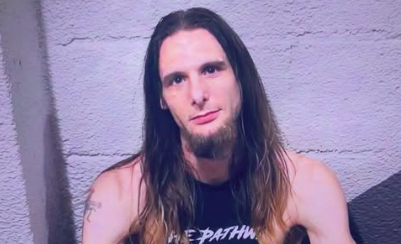
Kris Rex is my first American guest and I look at this as a fact that says a lot about how different the indie scene looks from opposite sides of the world. In Australia, independent wrestling is a scrappy, tight-knit thing, still fighting for oxygen. In the States, Kris tells me, “every state has at least five” promotions running. It’s an entirely different ecosystem, and Kris who is fifteen years deep into it, has a fresh singles title around his waist, and freshly back from a two-year hiatus, is exactly the kind of discussion I wanted for a first crack at the US scene: not a headliner chasing a WWE tryout, but a lifer who has seen every version of this business, good and bad, and is still choosing to be in the ring.
He joined me from Brooklyn, Roku championship belt visible in the background, admitting he’s more myth than public figure in his own circles.
“It’s like this myth, you hear of Kris Rex, but you don’t see him,” he laughs. “At least that’s how I feel about myself.”
Fifteen years, a belt won just months ago, and a story that starts before he was even born.
A VHS tape and a mother he never met
Ask Kris why he became a wrestler and he doesn’t reach for the usual answer. He’s clearly turned this question over many times.
There’s the simple version: as a kid in his family’s Brooklyn home, he popped in a VHS tape and the first thing he ever saw was Owen Hart and Koko B. Ware making their entrance. He hadn’t even seen a match yet, just the walk to the ring, and he was hooked. From there he watched everything: Nitro, Raw, even AAA on Telemundo, a language he didn’t speak but didn’t need to. “Wrestling? You don’t need to speak it,” he says. “I actually wrestled a deaf guy early in my career. It’s all emotion, feeling. It’s its own language.”
Then there’s the deeper version, the one that actually explains it.
Kris’s mother was, in his words, a “mark” in the truest sense. She was the woman in the crowd screaming and throwing things, believing every second of it. Her favourite wrestler was Macho Man Randy Savage. She used to go to what were then called “outlaw shows” which were small local promotions running out of school gyms and church halls, long before anyone called them “independent wrestling”. She went to those shows while pregnant with Kris and she was even in the crowd at Madison Square Garden for the (in-storyline) wedding of Randy Savage and Miss Elizabeth.
Kris never got to know her. She died of a brain aneurysm before he turned two. Everything he knows about her, he’s been told and almost all of it involves wrestling. He didn’t even see a photo of her until he was thirteen, so in his mind, growing up hearing about the Macho Man/Elizabeth wedding, Miss Elizabeth was his mother, in a strange, imagined way. Macho Man became his first favourite wrestler by default as a piece of a woman he never got to meet.
“It’s not just the five-year-old who popped in that VHS tape,” he says. “It’s also the baby that never got to meet his Mom. I’m doing something I’ve spiritually connected with her through.”
He pauses, then adds something that’s clearly become a genuine source of peace for him rather than grief: “I think of it like, even as we’re having this conversation, my Mom’s up there right now, proud of her baby boy. Her baby boy’s been on TV. Her baby boy’s been on pay-per-view.”
The heel who made everyone else look good
For most of his career, Kris wasn’t the guy the promotion was building around: he was the guy who built everyone else. As a heel, his gift was getting green talent over by being hated enough that the crowd rallied behind whoever he was standing across from.
“I was such a good heel that I was able to get whatever kid they put me with over, because they hated me so much.”
That skill set has now, fifteen years in, started sliding him naturally into a mentorship role. It’s something his trainer, Joel Maximo, has been telling him he’s earned. “He’s like, bro, you’re in this fifteen years and you have that status to tell these guys, hey, you’re doing that wrong,” Kris explains. He’s watched a wave of young independent talent come through who are, in his own assessment, more skilled at their age than he ever was. If he can teach them how the business actually works, he figures, they’ve got a better shot at a real career than he ever had.
But winning his current title has flipped a switch he wasn’t quite ready for. For the first time in his career, he’s the one being put over! He’s the babyface the crowd is meant to rally behind, rather than the heel doing the rallying for someone else. “I was never the guy to be put over,” he says. “Now I’m in this position where I have to be the one that gets the crowd behind him.” It’s a role reversal after a decade and a half of being the other guy.
COVID, money, and losing (and finding) the itch
Right before COVID hit, Kris was on what he calls his launchpad. He’d just won his first singles title with Infinite Pro Wrestling in Delaware, defended it in February, and was lining up a UK tour, his passport paid for and everything in motion plus a Canada tour. Then the world shut down.
Rather than risk it, Kris stepped away. He moved to Pennsylvania, landed a job that paid better than anything wrestling ever had, and for a while, genuinely didn’t miss it. “I was able to go to Walmart and put stuff in the cart without even looking at the price,” he says. “I don’t need wrestling. I don’t need wrestling.” He admits now, with some self-awareness, that underneath that confidence was a lot of bitterness about not being in the ring.
The itch came back twice, in fact. His first comeback attempt, around 2021–2022, involved a character he’d never tried before: a full “rocker” gimmick, bleached blonde hair, red leather pants, eyeliner, the works. It didn’t feel like him, and he knew it. A few shows in, he stepped away again.
The real turning point came in 2024. Kris had spent years doing graphic design work for Maine Event Wrestling, going all the way back to that promoter’s very first show. Uncertain who would even take a chance on him after another two years out of the ring, he sent a simple, blunt message: he wanted to get his feet wet again, he didn’t know how people felt about him, but did this guy have a spot? The answer came back immediately for the very show Kris had just designed graphics for now had a match with his name on it.
That run, working with Maine Ring Wars from September 2024 through October 2025, is what brought him all the way back. Working alongside talent much newer to the business than him left him “rejuvenated” in a way he hadn’t felt in years and it’s also where he finally stopped forcing a babyface run that wasn’t working and told the promoter the truth: he’d get more out of Kris as a heel.
The mask, the swerve, and the belt
What followed was a genuine angle worth telling. Kris and the Maine Event Wrestling promoter leaned into their real-life friendship on camera, building trust between “Kris Rex” and a local sponsor named Tabitha who had helped the promotion raise money to feed roughly fifty families for Thanksgiving. The story built toward a mixed-tag match where Tabitha would get her moment in the ring only for a masked debuting wrestler to interfere, cost the babyfaces the match, and reveal himself as Kris Rex! He was betraying the very friendship the story had been built on. “Everyone’s like, who the hell is this guy? Pull off the mask … it’s Kris Rex. The look on their face,” he laughs. “I don’t think the commentators even knew what was happening.”
Before that, there was an injury angle Kris is still proud of: a fake neck injury sold so convincingly that people outside the business were messaging to check on him. He’d researched real neck injuries with a three-to-four-month recovery window specifically so the story’s timeline would hold up.
He also stepped into producing during this run, building out a biweekly episodic web series to keep storylines alive between the promotion’s bi-monthly live events. The “go-home show” structure feeding directly into the next set of matches. That side of the business, he says, pulled together every skill he’d picked up over fifteen years: graphics, editing, booking, formatting.
It wasn’t without conflict, in that a planned marquee match against Jordan Oliver fell through. Kris’s relationship with the promoter eventually soured over responsibilities he says he never wanted, including contacting talent and venues. But by his own account, that Ring Wars run is what brought the passion back without the chase for money or a contract attached to it. “That’s where the Kris Rex you’re looking at right now is the second comeback,” he says.
Building the character: Raven, Mötley Crüe, and a name that means King
Kris is careful to draw a line between Kris Rex and himself. “If I said Kris Rex was me one hundred percent, you wouldn’t want to meet me,” he says, only half joking.
“It’s an extension of myself, the guy you’re talking to, but also the parts of other people I hate. The worst things I’ve been through.”
The single biggest influence on the character is Raven, not a passing fandom, but genuine study going back to childhood, watching and re-watching ECW tapes from 1995 looking for beats of that character nobody else pulled on. There’s a strange bit of destiny attached to it, too: Kris’s first-ever booking, at Extreme Reunion 2012 in Philadelphia in front of two thousand people, cast him as a member of Raven’s Flock. He showed up in ripped jeans and a bandana before he even knew what the segment was.
The second influence surprised me: Mötley Crüe, not the music, but the reputation. Kris genuinely lived a version of that lifestyle before wrestling consumed his time, and rather than hide it, he leaned into it as a heel, letting fans believe whatever they wanted about him. “I realised that people believe what I say. Who knows what else they’re going to believe?” His in-ring style, by contrast, comes from a different lineage entirely, Joel Maximo, Amazing Red and Rey Mysterio.
Even the name has an origin story. Kris started out backyard wrestling as “Reckless,” which evolved into a stylised “Kris Wreckcsz” which he deliberately spelled to look like a real surname. His trainer, Joel Maximo, told him it was too confusing and suggested shortening it. Joel also pointed out that “Rex” is Latin for king. For a guy who’d already spent years quietly identifying with royal and lion imagery, “I’m a Leo, king of the jungle” it clicked instantly.
“That’s just the way it is” isn’t good enough anymore
Ask Kris about the business side of wrestling and the tone shifts. He’s candid that his own reputation with promoters took a hit early in his career for being outspoken and fiercely loyal to his training camp and the kind of thing he now, at 36, looks back on as “completely stupid,” even if he still doesn’t fully understand why some of it stuck.
What he won’t back down from is his read on how the indie scene treats its talent. He points to the recent controversy involving Avery Styles being asked to help with ring crew work and Cody Rhodes’ public defence of him. The image of Cody Rhodes doing ring crew does exist, it is a real image out there, Arik Cannon just didn’t expect Cody to be in defense of Avery Styles. “More power to Avery Styles,” Kris says, “for [Avery] not buying into the bullshit.”
Kris has strong feelings here because he’s lived it with years of setting up rings himself, sometimes with only one other person, then going straight into a match with sore shoulders and no separate pay for the labour. His issue isn’t with helping out when he’s asked politely. It’s with promoters who expect unpaid labour as a condition of getting booked, then hide behind phrases like “that’s just the way it is” is a line he’s never accepted as a real explanation for anything.
“There is a reason it is the way it is,” he says. “It’s a manipulative tool to keep you from getting paid.”
He credits a new generation of talent for being smarter than his own generation was about accepting that treatment, and he doesn’t begrudge them for it. “We raise our children so they don’t have to go through what we went through,” he says. “If you just keep passing that down, you’re passing down trauma.”
The advice he’d give his younger self
I asked Kris what he’d tell himself at the start of his career, and he didn’t hesitate and he had three answers ready.
The first: join his high school wrestling team when a coach approached him about it. He was on the football team at the time, in the right weight class for the amateur wrestling squad, but he wasn’t interested because he was living fast, more focused on bars and backyard wrestling than organised sport. It’s a road not taken that still crosses his mind.
The second: think further ahead before burning bridges in an industry that’s smaller than it looks.
“Is that bridge I’m burning right now going to be one I need to walk across later?”
It’s the question he wishes he’d asked himself more often in his early twenties.
The third, and by his own ranking the most important: stop doubting himself. He tells me about an opportunity to work for Chikara that came through his relationship with trainer Mike Quackenbush. It was informal, but real, and one he talked himself out of before it even happened. He came home from work, got in his own head, decided he wasn’t good enough, and simply didn’t show up. No call, nothing. “Now, think back, if I would have just believed in myself,” he says. “Who knows?”
That kind of self-doubt, he says, held him back more than any of the business’s politics ever did.
Balance, forgiveness, and what he wants people to say
There’s a clear thread running through where Kris is at now, fifteen years in: for the first time, his wrestling life and his personal life aren’t kept in separate boxes. He describes years of deliberately keeping “Kris Rex” and his life outside the ring apart, coworkers who didn’t know about wrestling, partners who never came to shows. That’s changed recently, and he credits it for a sense of balance he’s never had before.
He’s also more willing now to meet fans than he ever was as a young heel who avoided merch tables entirely. A story about a friend’s compliment and being told, secondhand, that he’s one of the nicest people in the business, nearly brought him to tears, not because it was unexpected, but because he’s still working on forgiving the person he was earlier in his career.
“I have to forgive myself before I can accept the love.”
When I ask the question I always end on: what does he want people to say about him when Kris Rex retires, he doesn’t reach for championships or highlight reels.
“Fuck the moves, fuck the belts, fuck the photos,” he says. “I hope I was able to touch at least one fan’s life. That one fan remembers me. That makes the fifteen years worth it.” He credits his father, a military veteran, for the hard-work ethic he says defines him more than any accolade could.
What’s next
Kris is currently renewing his passport with an eye on international bookings in Mexico, Ireland, Italy, and Southeast Asian promotions are all on his list, along with a genuine interest in wrestling in Africa, where opportunities and training facilities are far scarcer than in the oversaturated American scene he’s used to. “Here, it’s so normalised,” he says.
“I want to go where people don’t have that luxury and bring what I know.”
For a guy who spent years insisting he didn’t need wrestling, that’s a long way to want to travel for it.
You can find Kris Rex on Instagram
Kris Rex is a 15-year veteran of the American independent wrestling scene, currently working out of the North East. This is his first appearance on In The Gorilla Position.
If you've read this far, please consider buying me a coffee! It's really expensive here in Melbourne.
comments powered by Disqus