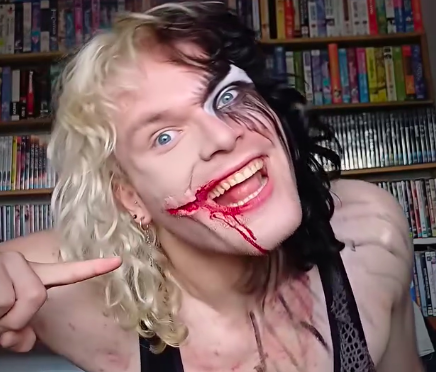
The Anomaly: The Freak Gremlin Boy bringing a different flavour to NSW pro-wrestling
New Horizon Pro Wrestling
•
written interview
•
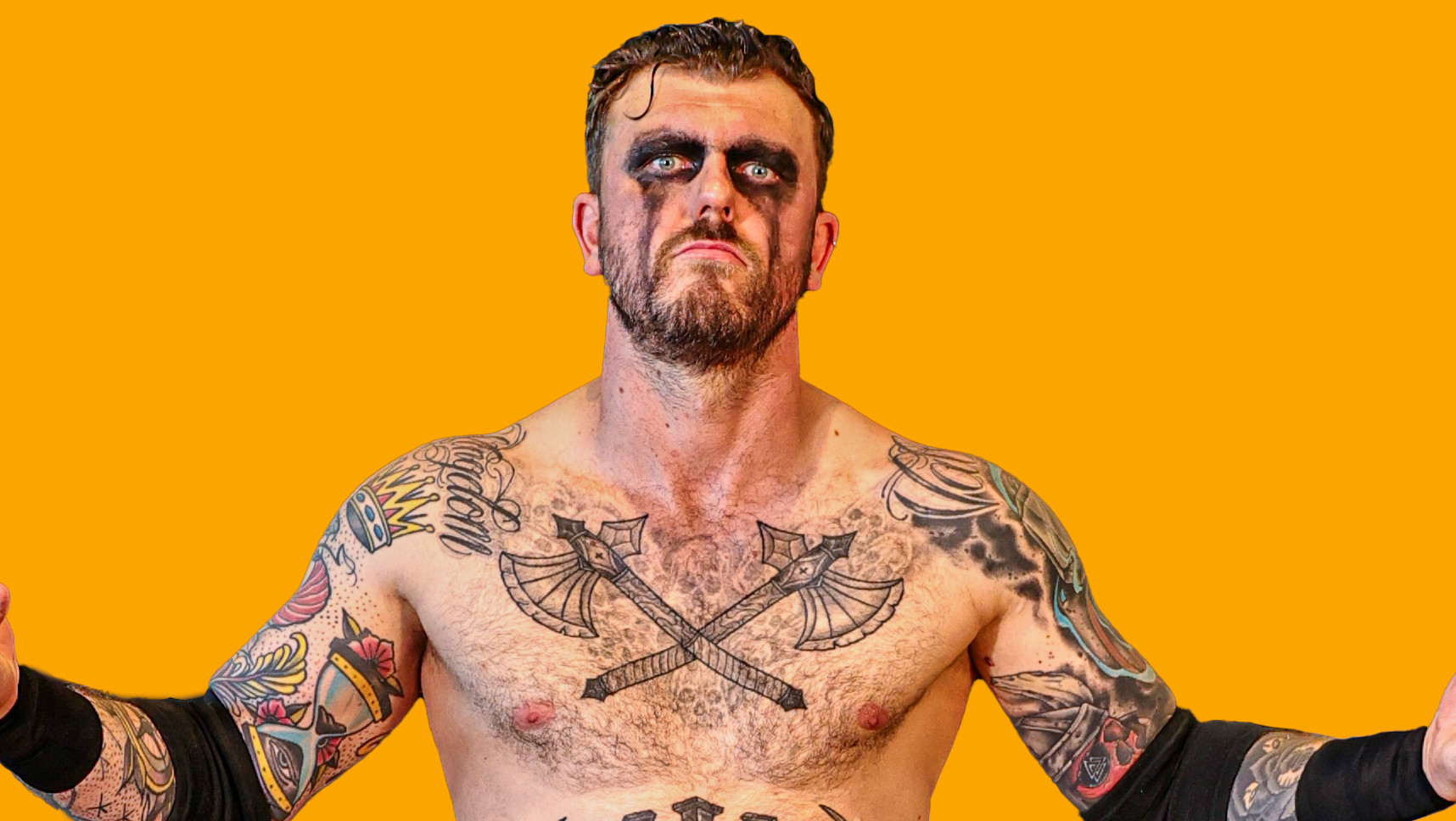
Inside the mind of Korvus: Building a villain, one Perth show at a time

There’s a version of Korvus that lives in a courtyard pub in Morley, hated on sight by a crowd that’s never watched wrestling in its life. There’s another version who spends his weekdays as head of the arts learning area at a Perth school. Talking to him, it becomes clear those two people aren’t as far apart as they sound and that’s kind of the point.
An accidental start
Korvus didn’t grow up dreaming of the squared circle. He grew up playing football at a serious level, representing NPL club Armadale after moving to Australia from the UK. Wrestling was a childhood fascination, sure, the kind that gets kids in trouble for putting classmates in the Walls of Jericho at recess, but it stayed a hobby watched on TV, not a career path.
That changed when football stopped being fun. “It just became a bit more of a chore,” he says. “I was doing it because I could do it. I knew I was pretty good at it — we’ve got the trophies and stuff — and it was easy. You don’t have to think.” The knocks started piling up as he dropped down divisions just trying to buy himself more time on the pitch, and his father’s line stuck with him:
When your hobby becomes a chore, stop.
What happened next was almost a dare. “I would just tell everyone I’m gonna go and be a professional wrestler, as a joke.” His brother, who’d played the same football journey alongside him, as a goalkeeper, didn’t buy it (his brother later followed the path to become ‘The Battle-Axe’ Ares). When the season ended and Korvus hadn’t followed through, his brother needled him about it. “He was like, ‘oh, I knew you couldn’t do it.’ So I was like, alright and that’s how it started. That’s how I actively got into it.”
A message to a contact at New Horizon Pro Wrestling (NH) (one of Perth’s two major promotions, alongside EPW) turned into an invite, and that was that.
Learning to fall
The transition from a sport where “you’re not meant to fall down” to one built entirely around falling down safely was its own education. His brother, a former goalkeeper, took to bumping almost instantly because hitting the floor was second nature. Korvus needed longer. “I found back bumps easier to get than front bumps, because I couldn’t see where I was going. With front bumps, you could see and you’re like, I shouldn’t be falling there.”
What kept him in it, beyond the physical challenge, was what it did for him outside the ring. As a teacher who spent years avoiding presenting at assemblies and public speaking, he credits wrestling directly with pushing him past that discomfort. “You out there in your tights, you’ve got your insecurities, but in that moment, you’re not allowed to be or the illusion is gone.” He describes his character as an amplified version of himself: someone who, unlike the version of him that has to convince thirty kids to buy into a lesson, simply doesn’t collaborate. “I’m right. You’re gonna do it, because you don’t know what I’m gonna do if you don’t.”
The character work
Ask Korvus what separates a decent heel from a great one and the conversation turns, unexpectedly, into a discussion of comic book reboots. His character has evolved over the years from what he calls “a Superman villain” into “more of a Batman villain” with the same core identity, reshaped for a new audience without losing what made it work in the first place.
“Your character should be able to be told in a sentence, or a couple of words,” he says. “Everything around that can change, the colour, the gimmick, whatever, but if the core stays the same. You’ve got more to play with.” He’s watched plenty of newcomers stumble by chasing the same instinct: making themselves too tough, too legitimate, too invulnerable. “I don’t live underground or in a church. I don’t set fire to people. I don’t have a cult behind me but in the moment, I have to have that cult behind me. I have to pick on the insecurities of the other characters, rather than say, oh, it’s my insecurity.”
That instinct for story runs through everything he talks about by reading crowd reactions, structuring a match, even reviewing his students’ creative writing. “I read a kid’s story today it’s three pages, and at the end of it, nothing had progressed. It’s the same with your character. You need to think of it as a long story.”
Where it gets tested is against unfamiliar opponents. He describes fighting Lance Anoa’i as a fully scripted, spot-by-spot match built out in advance. Facing Timothy Thatcher who’s a technical, mat-based specialist, was the opposite experience entirely. And one of the hardest matches of his career. “I was very character-based, brawly, where he was very technical. It was a learning curve, to have to do things on the fly and to know where you’re at in certain places and what fits, rather than just going spot to spot.”
The setback
Wrestling careers rarely end cleanly, and Korvus came close to walking away from his. Not from a wrestling injury, but from moving a desk! A torn distal bicep tendon put his arm in a sling for six weeks, right in the middle of a stretch where everything else in his life was shifting too: a new school role, a house renovation, a body increasingly aware of what years of bumps had cost it. “That was the point when I was like, does life now come first?”
What pulled him back wasn’t wrestling directly. It was fitness. He started training with online coach Marcius Pitt of 365 Progress, initially just to get back into shape. Strength came back, and with it, old habits like watching old shows, following his peers’ matches. “As soon as you disconnect and come back, you’re like — oh yeah, I do love this. They want me here.”
A small scene, a long way from everywhere
Perth’s wrestling scene, by his own description, is small even by Australian standards and geographically isolated in a way that shapes everything about it. Where east-coast promotions in Melbourne and Queensland can drive between shows and treat “professional wrestling” as one shared industry, Perth’s companies like New Horizons, EPW, a deathmatch promotion, and others tend to operate in silos, occasionally competing for the same dates.
A focus on collaboration and potential cross-promotion agreements could benefit everyone, helping to grow the scene as a whole while giving the small but diehard fan base opportunities to experience and appreciate the unique product each company has to offer.
He sees real upside in the idea of a proper national indie pathway and something with the structure of grassroots football or AFL development,
so talent doesn’t have to leap straight from local shows to overseas bookings with nothing in between.
Whether his own character, Korvus, is ready for a televised jump is something he’s genuinely unsure about. “I think my character’s maybe too convoluted right now [Korvus leads The Sons of Samael, that includes Taylor Pearce, Axxton and Queensland’s Tessa Armstrong] it would have to dilute a bit for a quick response.”
What makes a crowd believe you
Some of the most useful material in this conversation isn’t about matches at all. It’s about the craft. On promos: the good ones sound like someone with something to say, not an ad for Saturday’s show. The great ones show real research, character-specific investment in an opponent. On working a crowd that’s checked out: don’t argue with them. Slow the match down, simplify, and shift the sympathy toward your opponent instead of chasing heat for yourself. “You’ve lost them the second you’re out there arguing with the crowd.”
On presentation mattering less than it used to in a market this size, he points to a piece of Jim Cornette wisdom about the guy on the side of the road being cheered on purely because the crowd can see themselves in him. “You still don’t want everyone in the ring to look like a fan,” he says, “but with a smaller crowd, it’s the same as books and films.
“You want your main character to be relatable. You want them to go, oh, I can see me.” It’s part of why NH, in his telling, doesn’t turn newcomers away for not looking the part. He describes a recent recruit who showed up overweight and self-conscious, stuck with the training, and earned the coaching that came with sticking it out.
“The ones with a good attitude and a good heart? Those are the ones you really encourage. Other companies probably wouldn’t.”
Legacy, before the boots are even off
Asked what he wants people to say about Korvus once he’s finished wrestling, the answer has nothing to do with championships. “That he knew what he was doing. Even when I was injured, people messaged me going, what do you think about this? I want to still be that person even though it might not be in the ring.”
He talks about wanting to build NH into a place people travel to from interstate not necessarily to wrestle him, but to be part of a community he’s helped shape. He points to recent examples: talking a green, oversized newcomer through his first live segment not with a move list but with stage direction “I told him to just stand his ground. He stood there like that for a minute, and it made a brilliant photo.” It’s the kind of coaching that has nothing to do with technique and everything to do with the thing he keeps circling back to and that is story, character, and making sure the person in the ring understands both.
If there’s a single piece of advice he’d give his younger self, it’s simple: start earlier. But he’s quick to undercut it too.
“I don’t think I’d be able to contribute the way I do now without doing what I’ve done previously.” Which, for a wrestler who talks more about narrative arcs than finishing moves, tracks.
You can find @korvus.pw on Instagram
If you've read this far, please consider buying me a coffee! It's really expensive here in Melbourne.
comments powered by Disqus