New Horizon Pro Wrestling
Inside the mind of Korvus: Building a villain, one Perth show at a time

Part horror character, part metal musician, part swamp-dwelling smartarse; Frankie Grime is one of Victoria's most distinctive indie wrestlers. We sat down to find out what's really under the paint.
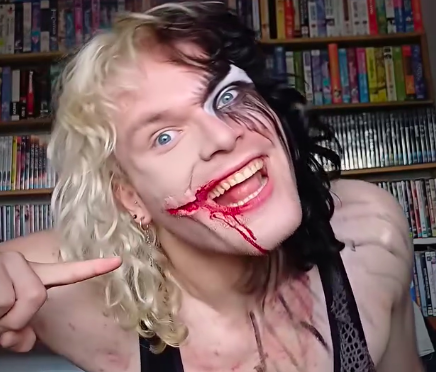
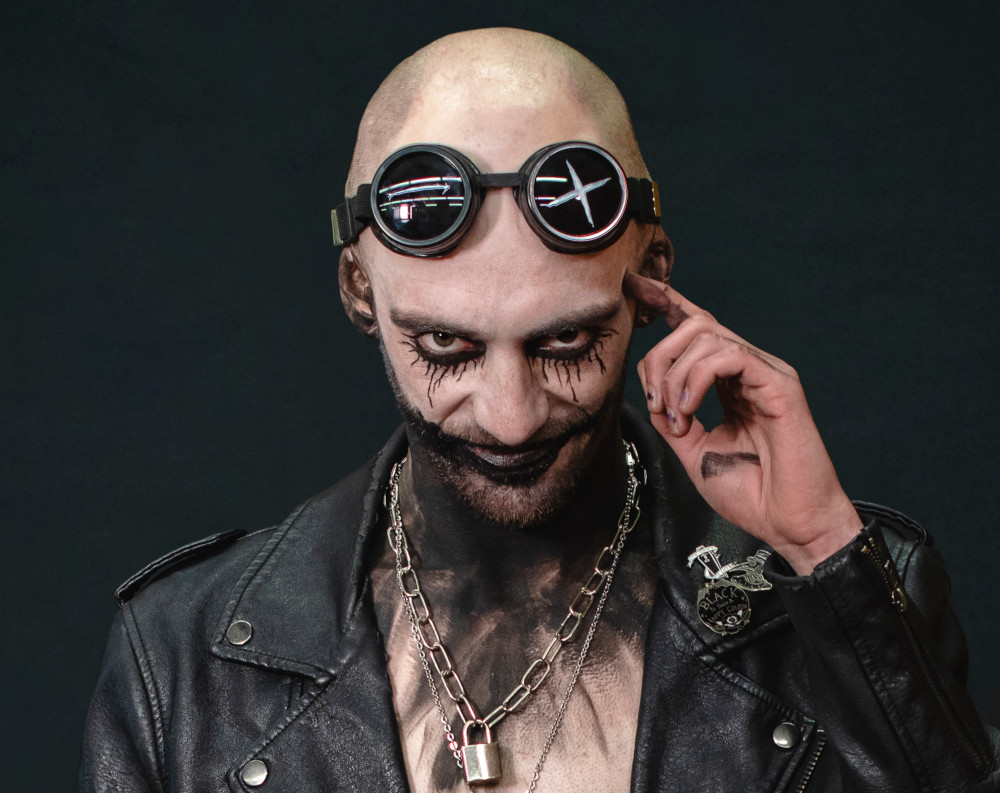
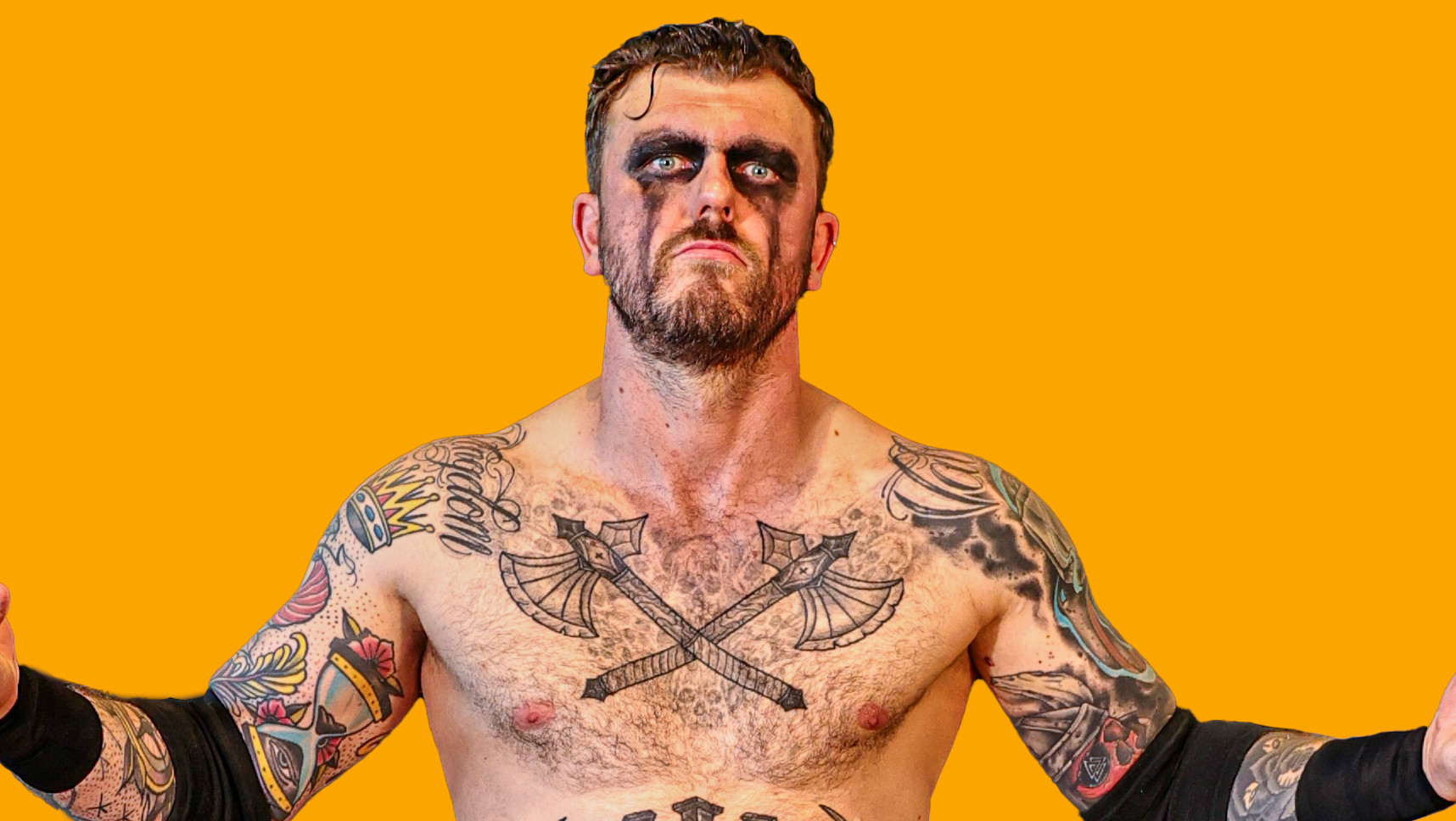
There’s something immediately disarming about Frankie Grime. The man who steps into wrestling rings wearing face paint pulled from the pages of a Nosferatu fever dream, something black-inked and feral, elegantly grotesque turns out to be a softly-spoken, thoughtful bloke from Mildura who’s just really passionate about telling stories. He’s between places at the moment, shuttling back and forth between regional Victoria and Melbourne for training and shows, usually on the bus because it’s cheap and, for now at least, free. He laughs easily, thinks carefully, and has a habit of talking himself to the edge of a big idea and then landing it perfectly.
So let’s start at the beginning. What got you into wrestling?
It’s a bit of an odd one, honestly. I was always into it as a kid. The first real introduction I had was when I was about seven or eight. A family friend was just massive on wrestling, a huge mark for The Rock, and I got introduced to the Rock-Stone Cold feud through him. It was cool, but it sort of washed over me a bit.
Then my dad bought me the old SmackDown: Just Bring It game on PS2, and that was my first proper sit-down-and-pay-attention moment with wrestling. That game was one of my favourites for years, even after Shut Your Mouth and Here Comes the Pain came out. It was something me and my cousins and brother would all crowd around and just go nuts on. It resonated in this way where I thought, yeah, this is glorified theatre violence. And I loved it.
Then around 13 or 14, I kind of fell off it. Not really disinterested, it just wasn’t sticking. And it wasn’t until I moved out of home at 18 and moved in with a mate who was deep into wrestling that it picked back up. That was around the time Sheamus was world champ. I jumped back in and something just clicked.
And from there to actually training?
Well, in between, music had been my main thing. I’ve been a musician for about 15, 16 years. So wrestling was always sitting there in the background, but I had more opportunities in music, so that took priority. Then a group of us had this idea: let’s buy a ring for the backyard and just be idiots in it. And once we were actually doing it, even in that stupid backyard way, I looked at it and thought, if I trained properly in this, this could actually be something. And eventually, it was. I started training properly around 2017.
You’re now about three years into it professionally. But those backyard days sound pretty formative.
Oh, they were the glory days, man. Looking back on it now, genuinely. The guys who were out there in the backyard with me: JP Bamford, Ace Shack, most of the original MXW crew, we’ve all ended up in the professional scene together. We went from 10 mates watching us mess around to 300 people in Geelong watching a card with Brian Kendrick and James Storm on it. That evolution happened pretty fast.
We had the stigma for a while, obviously. People would call us the “yard tards.” But yeah, we all just sort of trained, grew up, and merged into the proper scene together.
You’re also a musician. Someone once described wrestlers as “theatre kids who go to the gym.” Does that resonate?
Yeah, I’ve got absolutely no shame in that. It’s accurate. And honestly, the performance background has helped a lot with where I am in my career. Playing shows with my band, getting up in front of a crowd taught me about nerves, about switching on, about the difference between existing on stage and actually performing. It’s that same switch in wrestling. Crowd of 10 or a crowd of 200, you go out there and you give it everything. People came to see a show.
So which is more important? The showmanship or the athleticism?
I’d draw the line right in the middle and say both matter enormously, because you can be brilliant at one and terrible at the other and that creates its own problems. The biggest example is Paul Heyman who was never really a wrestler, but put him on a microphone and there’s nobody alive who can touch him. Then you’ve got guys who are phenomenal athletes but absolutely drop the ball the second they have to speak. You work to your strengths, you work on your weaknesses. But you need to find the balance.
The slightly controversial example I’d throw out there is Chris Benoit. Dog shit on the microphone. Just completely lost out there when he had to talk. But watch him in the ring and he’s one of the most technically brilliant wrestlers to ever live. Such a complicated legacy.
You clearly have strong feelings about Benoit.
Yeah, I’m a massive mark for Benoit’s work, and I choose to separate the art from the artist. What happened at the end was utterly tragic and I mean that in every direction, including toward his family. But there’s more to the story than the surface. The concussion research that’s come out since, the CTE data, the lifestyle that was just relentlessly brutal on the brain. I think a lot of people demonise him without really sitting with all of that.
What it does point toward is how important concussion protocols and wellness policies are. And wrestling’s a lot better now. That Raw the other day, Bron Breaker comes back and within seconds he’s blade-jobbed open and straight into concussion protocol. That’s the right call. You don’t want to be putting performers in danger, and you definitely don’t want anyone going home in a state where they’re a danger to themselves or others.
Do you watch wrestling as a fan or as a worker?
It’s both, and I try to be deliberate about which mode I’m in. When I sit down for a live pay-per-view, I want to immerse myself as a fan first. Just enjoy it. But when I go back and watch older stuff like the Attitude Era, Ruthless Aggression, other promotions, I’m studying. I’m watching how characters move, how they react, what works and what’s a lesson in what not to do.
I still let myself be a fan though. Like, I had a pretty good idea Danhausen’s debut was coming just from talking to other workers and reading the dirtsheets. But watching it play out, being a big fan of his work? That was everything. You need to be able to let yourself have those moments.
Speaking of Danhausen …
He’s one of the best character workers going today, in my opinion. There’s a video from maybe 10 years ago, back before the paint, where he’s just Donovan, and you can tell he was at this point of not knowing what to do with himself in the business. Then this whole thing emerged, and it turned him 180 degrees. Who would think you could build a career like that off pure character? It’s remarkable.
And I get it, because my own character draws from a similar place. It’s personal and it’s built from things I actually love. Mine is horror and metal, all those spooky Nosferatu vibes, the black metal aesthetic. Being a musician fed into it. It’s all horror plus metal equalling wrestling, basically.
Tell me about Frankie Grime, the character. How much of it is you?
The simplest way I can describe him is: it’s me, but a lot more disgusting. If I was this feral, grotty swamp-dwelling thing, that’s Frankie. But it’s still fundamentally my personality, just with a bit of pizzazz on it. Turned up to 11.
Being in the Cudas and stuff, there was always this sort of cheeky smartarse energy in the group, very much just a bunch of mates taking the piss, and normally I’m that person. Very smiley, joking, hard to be serious for long. Sometimes I’m trying to cut an intense promo and I just can’t stop myself from being funny. It’s a challenge. But I think in a weird way it works, because tapping into the side of me that’s not usually seen. The genuine anger or intensity, that’s still authentic. It’s just a different dial on the same person.
What has wrestling taught you about yourself?
That I’m a small fish in a big pond. Not just physically, but in terms of the scene. Victoria alone has so many people working their absolute arses off just to find a niche. What wrestling did was activate a creative side of me I didn’t know was that strong. Ninety percent of the time my brain is just running storylines, characters, angles.
But more than that, it changed how I think about things in real life. Before wrestling, the approach was pretty much just: get through the day, don’t die, that’s a win. Now I’m thinking about where things lead. I’ll be plotting a wrestling storyline and go, okay, where does this end up in six months? And then I apply the same thinking to, say, a job or a goal. Where does this get me in five years? Wrestling gave me a future-facing mind.
Is there an end goal? Where does Frankie Grime go from here?
Look, everyone in wrestling secretly wants to get to WWE. They can deny it, but it’s there. We all want to be the Roman Reigns or the John Cena. But the reality doesn’t work out that way for most people, and I think setting a realistic level for yourself is genuinely healthy.
Honestly? If I just got to wrestle my way around Victoria and New South Wales, met great people, had some fun matches, entertained a bunch of crowds and made the most of it … I’d be completely fine with that. That would be enough.
But the bigger dreams are there too. Japan. The UK. Even just working promotions around the US. I love to travel more than most things, and wrestling has already taken me places I never would have gone otherwise. Just being able to see as much of this country and eventually the world through wrestling? That’s a massive goal in itself.
What does a good night in the ring actually feel like?
The entrance is everything, especially somewhere new. You’ve got that walk from the stage to the ring, and that’s your first impression: who you are, what your character is about. If you can land that, you’re already halfway there.
Then from the bell, as long as you and whoever you’re working with can just go out there and have fun with it without worrying about a five-star Meltzer rating, not trying to set the roof on fire and you can feel the crowd responding, you’re doing something right. Even if they hate you. Especially if they hate you. At least they remember you.
I’ve even had a couple of older blokes who look at the face paint and clearly think: what is this? Very sceptical. Then they watch the match and they’re like, “Oh! Actually, you’re pretty good”. Next thing you know you’ve got two new fans who were weirded out by you, but they’re still fans. That’s a win.
Have you ever thought about walking away?
Yeah, absolutely. There was a point where all the travel and the backstage drama — stuff that I wasn’t even part of — just wore me down. Wrestling is like high school. Things get around. There’s more bitching than I ever anticipated, which sounds naive to say, but it genuinely surprised me how much. You get a room full of big egos and there are going to be clashes.
I tend to stay out of it, but even just proximity to it takes a toll on your mental health. There was a period where I was sitting with it all and thinking: is this worth it if everyone’s just going to be carrying on like this?
Then I had a conversation with one of the Cudas guys. I genuinely can’t remember who, and it was this little light bulb moment. He basically said, look, it’s like school. You go to learn, you hang out with your own people, you do what you need to do. You don’t have to involve yourself in all the drama. Just don’t play into it.
And that was enough to drag me back. I like doing this. I like making friends through wrestling. If people have their issues with other people, that’s got nothing to do with me. I’m here to put on a show.
You’re right that wrestling is essentially a relationship you keep coming back to.
Toxic ex-girlfriend, honestly. Actually, I’ll correct that: toxic relationship. As much as it pisses you off, you keep wanting to be involved in everything. You go back and forth with it. But those little moments where something just clicks like a great match, a connection with a crowd, a conversation that flips the switch back on; those are the things that make it impossible to walk away for good.
What does wrestling give you that nothing else does?
Physical therapy. That’s genuinely the best way I can put it. Music soothes the soul emotionally, it makes me feel fantastic. Wrestling gives me the same feeling, but through completely different means. I’m not really a confrontational person. I don’t do a lot of physical things in life that let me just… go. So when I’m in a 10-minute match getting beaten up, I come backstage and think: that’s exactly what I needed.
I don’t have to talk about what’s bothering me. I don’t have to explain why I’m stressed or analyse my feelings. I just go out there with whoever I’m working with and let it out. Nine times out of ten, I come back through the curtain feeling absolutely phenomenal. It’s like going to a therapist except they pay you.
When Frankie eventually hangs up his boots, what do you want people to say?
I’d just want them to remember him as entertaining. Whether they thought I was any good in the ring or not? Cool, if you did, great. But as long as people feel like they got a show, like I provided what they paid for and they remember that I’m happy. And from the workers’ side, if people look back and say he was good to work with, they loved having him in matches, then that’s everything.
And maybe, somewhere in the back of their minds: but God, he was disgusting. Dirty little man.
There’s no such thing as bad publicity.
If you could go back and give yourself one piece of advice, what would it be?
Go and train, and get the hell out of the backyard.
From 2017, just before it all started that’s what I’d tell myself. Get to Melbourne, start training. As much as I look back on the backyard era as the glory days, and it genuinely was one of the best times of my life in wrestling, I would have started the real work earlier. I love those memories. I love the guys who were there. But knowing what I know now? Yeah. Train first. Be an idiot in the backyard second.
Frankie Grime wrestles primarily for MXW, who run shows across regional Victoria and beyond, as well as making appearances for promotions including Malice and PWSA in Adelaide. MXW’s upcoming tour featuring Super Crazy hits Ballarat and Bendigo in May.
If you've read this far, please consider buying me a coffee! It's really expensive here in Melbourne.
comments powered by Disqus