New Horizon Pro Wrestling
Inside the mind of Korvus: Building a villain, one Perth show at a time

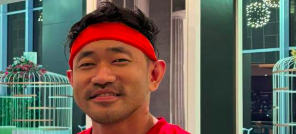
There’s a moment in pro wrestling and every wrestler who has ever laced up boots knows it, where the training stops and the leap of faith begins. For most, that moment arrives after years of grind, of repetition, of working shows in front of crowds that range from dozens to hundreds to thousands. For Eric Garuda, it arrived almost immediately. Two days before we spoke, he had made his debut as a professional wrestler in Indonesia, a country where, until recently, pro wrestling had been effectively banned.
Ask Eric Garuda why he became a wrestler and his answer is immediate, and honest in the way that only people who have thought hard about something can be.
“It’s basically just to satisfy the inner child,” he says. “Some days back in junior high school, you watch TV and there’s this moment where you go, I want to be that guy. Inspired by the athleticism, the drive to move forward even with the obstacles.”
That pull, the one that grabs a kid watching television and doesn’t let go, is the same thread that runs through almost every wrestler’s origin story, regardless of where they grew up. What makes Eric’s version unusual is that for him, and for most people in Indonesia, acting on that pull wasn’t straightforward. It wasn’t just a matter of finding a local gym and paying training fees.
Pro wrestling in Indonesia has had a complicated relationship with legality. Years ago, following an incident in which children attempting to replicate moves led to a fatality, wrestling was effectively shut down! No streaming. No events. No public presence. The sport didn’t disappear entirely, but it went underground, invisible, impossible to build on in any formal sense.
“It was forbidden,” Eric says simply. “And then yeah, we’re just trying to resurface these things, make sure everybody’s not trying to replicate any move whatsoever, and just grow it here.”
The comparison with the rest of Southeast Asia is instructive. Countries like the Philippines, Singapore, and Malaysia have had functioning indie wrestling scenes for a decade or more. Indonesia is catching up rapidly, and with all the energy and uncertainty that comes with that.
Starting pro wrestling in a country without an established scene means building everything from scratch. There’s no well-worn pathway, no network of trainers who all came up through the same system, no promotions with years of institutional knowledge behind them. There’s also the constant awareness that regulatory attention could arrive at any time.
“Even at this time, we’re cautious about the whole regulation,” Eric admits. “If they see we’re growing and think this is not safe becaue we’re not under any organisations whatsoever, we don’t follow any protocols. We call ourselves wrestling while it’s not very common wrestling?”
He has been proactive about this. Before his debut, he visited wrestling organisations within the Indonesian government’s sporting infrastructure, trained with them, and worked to explain that what he does and what they do share the same fundamentals, the same safety principles and the same structure. He has built relationships. He is, essentially, doing diplomatic work alongside the athletic work.
“As of now, I’m just waiting. Hopefully the network, the relations I built are strong enough so they’re not trying to touch us for a while at least.”
It’s a precarious way to build a career, but Eric speaks about it with a calm pragmatism. He understands the landscape he’s operating in and is doing what he can to navigate it intelligently.
Eric’s debut was two days before our conversation, and the feeling he describes is something wrestling fans might recognise from the way their favourite wrestlers talk about early days.
“The feeling is: I don’t feel ready. So it’s just like, fuck it, let’s do it.”
The opponent was a good friend, which helped. They were able to talk through the match together, make sure each got their spots in, look after each other. Eric is candid about where he is technically. He’s still thinking through every step, still carrying the weight of remembering the plan while trying to perform it.
“To remember all the spots I have to do is already taking half my brain power. And then to sell every move, and then to make sure I look at the camera or look at the audience, and then psychology. Oh my god, that’s a lot.”
He watched the tape back and noticed the crowd who we well-intentioned, genuinely supportive, didn’t always know when to react. Nobody was working them, guiding them, telling them when something big was coming. The silence between moves was telling. He knows it’s something he needs to work on.
“I can feel like in between moves, in between spots, it’s complete silence. Like the crowd doesn’t know how to react. Nobody guides them.”
There’s a beautiful honesty in the way Eric talks about his early limitations. He doesn’t dress them up or pretend they don’t exist. He identifies them clearly and matter-of-factly, which is itself a quality that suggests he’s going to improve.
The character Eric is building in the ring is not random or generic. It’s built from something real in him and something he’s been thinking about for a long time.
Eric Garuda is, at its core, about two things.
The first is justice. “He sees everything and judges everything. If it’s not justice, then he will be the justice. Because in every old movie, you try to stand up for someone and then the other guy just bullied you into it, and both of you lost. That’s not fun. That’s not a good story. You want the good guy to win. The good guy has to be the strongest. The good guy has to be brave.”
The second is something more nuanced; the belief that people can change, that bad people aren’t necessarily born bad. “Bad guys become bad guys because of things. There are circumstances and everything happened to them and they just chose a different path, or they are forced into a path they don’t like. So Eric Garuda is about seeing that person as they are, what the potential they can be, and how he can turn that guy into the good guy.”
It’s a character with real philosophical depth and one that maps closely to who Eric actually is outside the ring. He trains Eskrima, the Filipino martial art, for self-defence and to stand up for others. He tries to see the good in people, to understand why they act the way they do, to be patient with those who are difficult. The gap between Eric Garuda and Eric the person is, by his own measure, about 10%.
“10 percent is trying to be more confident,” he says with a quiet laugh.
There is a dimension to Eric’s story that adds a particular weight to everything else that he does. The reason the leap of faith has to be taken in private, at least for now.
His family doesn’t know he’s wrestling.
Nobody does. He has kept the entire endeavour completely hidden from the people closest to him. When asked how he thinks they’ll react when they find out, he pauses.
“I’m not sure. I probably don’t want to imagine as of now. There are expectations for me to be great in other things. This doesn’t sound like something they wanted.”
“If they see you in banking, your customers see you in underwear, looking funny. That could also be a very difficult discussion.”
But beneath the humour is something more serious. Eric is wrestling in both the athletic and the metaphorical sense with the gap between the life he’s been living and the life he wants to live.
“All my life I’ve been doing what they want me to do and I don’t feel much happier. So yes, some part in my mid-crisis life, I decided to do whatever I want. And if they like it, they like it. If they don’t, then they just have to deal with it.”
He is clear-eyed about the logic of it. “They’re not responsible for my happiness. I am.”
There’s a comparison he draws to choosing a life partner. The people who love you can have an opinion, but they aren’t the ones living your life. You are. At some point, you have to make the choice for yourself.
Interestingly, Eric sees the Indonesian social context as more forgiving of this kind of decision than, say, Singapore, where he thinks the expectations around career and respectability are more rigid. Indonesia, he feels, is a country where people understand the impulse to follow an unconventional path even if they don’t always approve of it.
One of the more fascinating aspects of Eric’s situation is where it is geographically situated. Indonesia is an enormous country, the fourth most populous on earth, and while its pro wrestling scene is nascent, the potential for growth is significant.
Eric’s debut was received warmly by an audience that came in the spirit of wanting this to work. “Clicking with the crowd is not that hard. It’s not because it’s natural for us, but because they came with good intention. They wanted pro wrestling to grow in Indonesia.”
The crowd was forgiving, enthusiastic, hungry for anything. And already there are Instagram comments calling for more: for blood, for hardcore content, for death matches. Eric doesn’t dismiss the hardcore impulse but is measured about it. He doesn’t mind bleeding, he says, but the morning after questions from people who don’t know about the wrestling and the potential complications on his real world career are real considerations.
As for the future of the scene more broadly, he is pragmatic. The economics are essentially non-existent right now. The first batch of Indonesian pro wrestlers isn’t doing this for money because payment is training sessions, if that. The promoters themselves are still figuring out whether this can become a sustainable business.
“We’re very new. We’re the first batch of pro wrestlers. We don’t know yet. And the promoters don’t even know they can get money out of this.”
The dream of wrestling in Japan, perhaps; opportunities elsewhere in Southeast Asia; maybe one day a conversation with a larger promotion is held loosely. “Not everyone can be Roman Reigns,” he says. “It’s just taking your parts and doing what you can.” The goal isn’t a title or a contract. The goal is impact.
The question that gets to the heart of why anyone does this. Why someone would train, risk injury, hide it from their family, navigate government regulations, perform in front of a crowd that doesn’t always know when to react is the question of what wrestling gives you that nothing else does.
Eric’s answer is considered and personal.
“I get to choose and become an alternate version of me that I wanted to try for so long. You know there are questions like: if money is not the problem, what would you become? So yeah, this is every part of that. Because I wanted the good guy to win. I wanted the good guy to have the strength and be the justice for once. Not losing to the bully and being told to be the bigger person and walk away. No. That’s bullshit.”
There’s real fire in that. It’s not just athletic ambition or a love of performance. It’s something older. It’s the desire to inhabit a version of yourself that the world doesn’t always let you be. The person who stands up. The person who doesn’t back down. The person whose goodness is also a strength, not a liability.
Wrestling, at its best, is a medium for exactly that story. The reason kids watch it and want to be that guy is the same reason adults keep watching. It is the fundamental human need to see that story told, the good guy overcoming, the justice landing.
Eric Garuda is trying to tell that story. He’s doing it in a country where no one has really tried before, with a family that doesn’t know, with a debut that was two days old when we spoke, and with the full, honest awareness of how much he still has to learn.
Near the end of our conversation, the question of legacy came up, what Eric would want people to say about him when he eventually hangs up the boots.
His answer wasn’t about championships. It wasn’t about matches or moments or how many countries he’d worked.
“He did his best. He inspired me to do what I always wanted to do. He made me believe my family is not toxic. He made me believe my partner is not trying to destroy me. Just trying to inspire as many people as I can. I wanted them to see that with my presence around them, they feel better. They feel inspired. They feel cared for.”
He paused, and then added something that hit differently.
“Especially for men. I’m very into men’s mental health. To be strong, not show tears, not show weakness. But the suicide rate is high, more than ever. So let’s just say: if you need to talk to a friend, talk to a friend. If you don’t have a friend, talk to me. I’ll be here. I can be your friend for a day. Just survive.”
Just survive.
It’s not the most conventional wrestling philosophy. It’s also, perhaps, exactly the right one for someone starting out in a place where wrestling itself is only just surviving and finding its footing, making its case, building the foundations of something that might, one day, be a scene.
Eric Garuda is at the very start of that story. Whatever comes next, he’s going to be interesting to watch.
Eric Garuda made his pro wrestling debut in Indonesia in June 2026. He competes for promotions working to establish professional wrestling in the country. Watch this space.
If you've read this far, please consider buying me a coffee! It's really expensive here in Melbourne.
comments powered by Disqus