SPW
The sensational teacher: Selina and the quiet revolution of Singapore pro wrestling

There’s a certain kind of wrestler who feels manufactured, that is, polished, media-trained, predictable. And then there’s Alexis “Friggin’” Lee. Unfiltered, chaotic, brutally honest, and somehow still relentlessly driven, Alexis represents something far more interesting: a self-made wrestler from Southeast Asia who carved her place in a global industry that wasn’t built for her. When we sat down to talk, the goal wasn’t to rehash favourite matches or dream opponents. It was simpler than that and harder.Why wrestling? Her answer wasn’t glamorous. It was real.
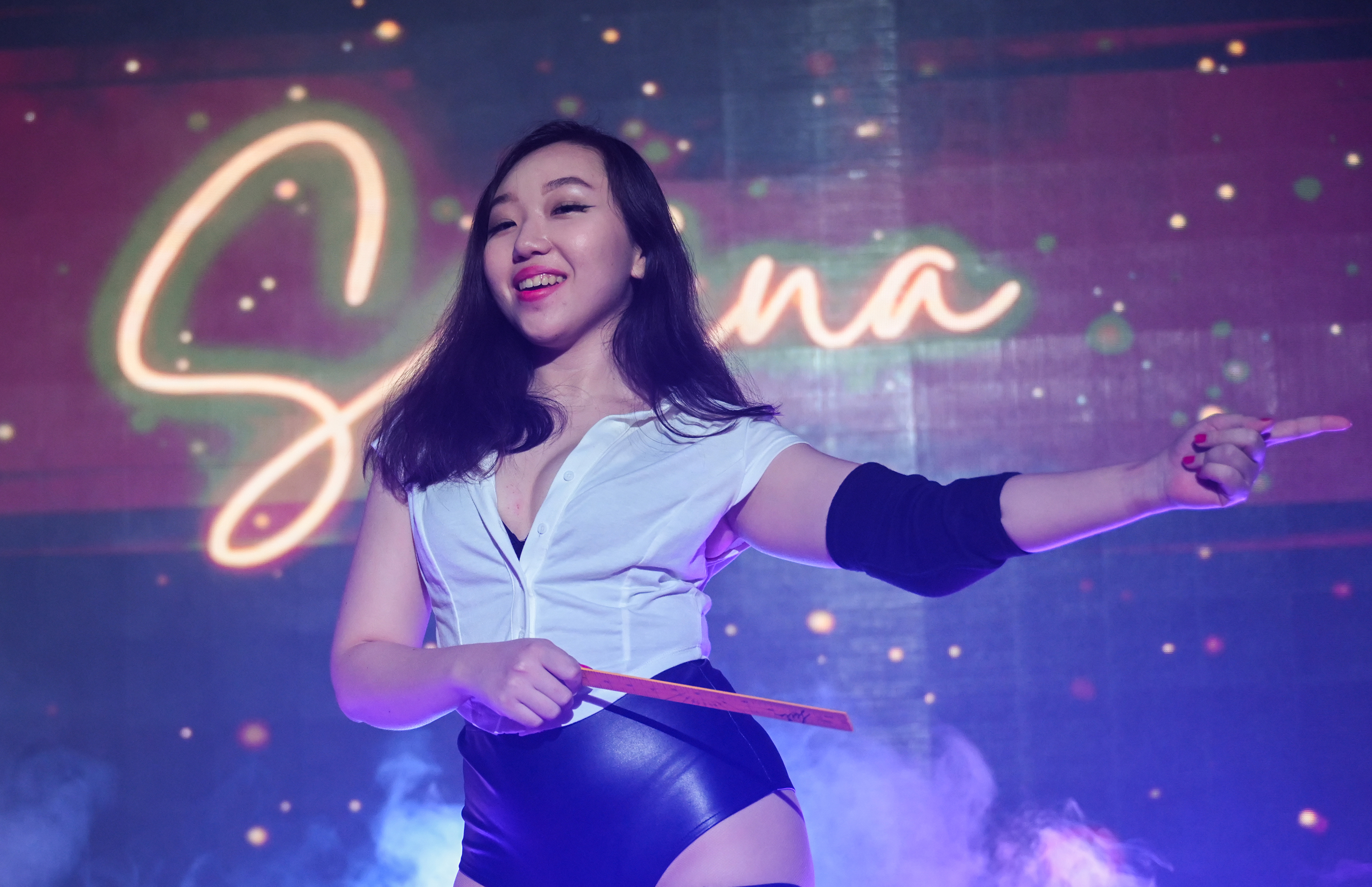
Image credit: @markashleyfilms Alexis Lee is sitting in a Paris hotel room, cold, slightly underfed, broke after a Disney cruise booking she absolutely did not cancel, and mid-way through wrestling in five countries in one month. She has just come from Lyon. She is headed to London for her UK debut tomorrow. After that, Korea. Then Singapore. She describes herself, repeatedly and cheerfully, as a nobody. The evidence suggests otherwise. She sat down with In the Gorilla Position to talk about the bullying that started everything, the parents who tried to stop her and eventually became her travel companions, a wrestling scene in Southeast Asia that most of the world hasn’t caught up with yet, and what it means to do this much work for this little recognition. And why she does it anyway.
She almost didn’t go to the trial class.
Not because she was scared, or underprepared, or unsure she wanted it. She had wanted it since high school, since she started watching wrestling as a way of processing the specific helplessness of being bullied, since Mickie James won a title on her birthday and she took it as a sign from the universe.
She almost didn’t go because her friend was supposed to come with her.
The friend was a massive Undertaker fan. They had made a pact. They were going to be big stars in WWE, travel the world, do it together. She didn’t show up.
“I was the only girl at the trial class. And guess where I am now? She’s not even wrestling. I don’t even know what she’s doing.”
Alexis Lee joined Singapore Pro Wrestling’s trial class alone, took her first bump on that first session, which, she notes, was not a given at the time, not everyone did and felt it in her body for days.
“I wanted to be a wrestler so bad. I was like, I’m going to take a bump. And I felt it for days. My body’s not used to it. I love it.”
She officially joined SPW’s training school in January 2013 and debuted in August of the same year. More than a decade later, she is currently in Paris, eating approximately one and a half meals a day and asking people to buy her merch because she has too much stock to carry and not enough layers for the European spring.
She is also, according to a fan post she pulls up during the conversation with visible satisfaction, one of the hardest working wrestlers in the world right now.
The honest answer, the one she has told many times and tells again anyway, is bullying.
Elementary school was rough. High school was when she decided she’d had enough. She started watching MMA and pro wrestling as a kind of research project. If she was going to fight back, even in her delusional dreams, she needed material. Pro wrestling pulled her in harder than MMA, because pro wrestling had stories.
“The storylines just kind of spoke out to me. Especially when the Mickie James and LayCool (Layla and Michelle McCool) thing happened, where she was being bullied and stuff. I freaking cried.”
The LayCool storyline in particular landed because it mirrored something real. A character being targeted, mocked, diminished, and refusing to go away. When Mickie James won the title from Michelle McCool at Night of Champions, Alexis noticed the date. It was her birthday.
“I was like, that’s my birthday present. It was stupid as fuck.”
She started trying the moves at home. Her parents walked in at various points to find her and her friends doing things on their bed that did not look like what was happening on television, and the explanations were always awkward. But something shifted. The physical confidence of learning to move that way, of choosing to take up space rather than shrink from it, changed how she carried herself.
“There was this newfound confidence I never had before. When you’re being bullied, you just want to hide away. You just want to not be seen. And at that point I was like, hell yeah, I can be the extrovert I always were.”
She had always been an extrovert, she says. She had been forced into the shape of an introvert by years of being too much for the wrong room. Wrestling gave her the right room.
When she was in polytechnic, someone told her there was a pro wrestling company in Singapore. Her original plan had been to move to Germany. There was a free university there and she’d thought she could study and learn wrestling at the same time.
Her parents said no. Firmly.
“They knew me better than I knew myself. Because I am irresponsible as fuck. If I was there, I would get drunk. It would be terrible.”
She says this without defensiveness. It is probably correct. The forced stay in Singapore led her directly to SPW, which she would not have found in Germany, and she acknowledges that the path she is on now would not have opened the same way if she’d gotten what she asked for.
Still, the SPW years were not easy at home. Asian cultural expectations around what women do with their bodies, particularly violent things for entertainment, meant her parents were firmly against it. They didn’t just object in principle. They contacted the SPW promoter directly and asked him to stop booking her.
“They stopped me from going training. They tried.”
This is also when she was coming out to her parents. As bisexual. In the middle of the wrestling battles.
“So it’s like double, yeah, I’m a wrestler. Also I like girls. So that is not fun in Asian culture. I was like fuck it. Just boom. Deal with it, human.”
She notes, with some practicality, that being in Asia rather than other parts of the world meant she was not thrown out of the house. She had a home. She could talk. It was not uncomplicated, but it was liveable.
The change, when it came, came gradually. A few years ago she brought her parents to the Philippines for a show. They had never been there before, so it was the perfect excuse to bring them to watch her wrestle. Not entirely by their choice, she admits, but they came. Her dad’s phone got stolen on a local train, which she says is on him for trying to travel like a local. But they stayed, and they watched, and her mum had the biggest smile on her face.
Most recently, she brought them to China for MKW shows in Chongqing and Chengdu. She planned the whole itinerary.
“It was stressful for me because I had to bring them around. But it’s great to see them now just be okay with it all. My mom having the biggest smile on her face watching the entertainment aspects of things.”
There is also a creative dimension to it now. She designs her own merch; art for shirts, keychains, trading cards, country-specific stickers and her mum is an artist, but not as her livelihood. It’s hard to have that as a job in Asia. They talk about it. She reaches out for ideas and opinions.
“It’s just great having them involved in the wrestling in whatever ways they can.”
She won them over the way she wins over most things: by simply not stopping until they ran out of reasons to resist.
“They gave up. I’m like the devil they gave up on.”
When SPW ran its first official show in 2013 (their first unoffical show was in 2012), there was essentially no professional wrestling scene in Southeast Asia. She was one of the first women in the region doing this at all.
Since then the map has grown considerably. MyPW. Setup in Thailand, which was previously known as Gatoh Move under Emi Sakura, extended from Japan, which then became Choco Pro Wrestling in the Philippines, with more promotions coming. The scene is real, growing, and largely invisible to audiences in the West and even in Australia.
China is a particular area she has developed. She has worked with three promotions there: Middle Kingdom Wrestling, China Wrestling Alliance, and Global Wrestling Frontier and wants more.
“I just want to dominate the China market.”
The Chinese fan base, she says, is passionate in a way that feels almost disproportionate to how early the scene is. There is a wrestling fan club group chat where members post approximately a thousand wrestling items a day.
“Thank God I’m not in it. But my friends who are in that group chat say they’ve seen my name pop up a couple of times. So I feel seen.”
The food costs five dollars a bowl. The massages are thirty dollars for ninety minutes. She speaks about China with the warmth of someone who has found a place where her work lands and the currency exchange makes sense.
Her first WrestleMania week was this past April (2026) in Las Vegas. She went in expecting to be invisible. The last time she had wrestled in the United States was 2018 in Orlando, and she had no reason to think anyone would remember her or seek her out.
She got six bookings for the week.
“I managed to get six bookings. Jesus. Not bad because I’ve networked a lot. My friends kind of got me on stuff. And then some fans were asking for me.”
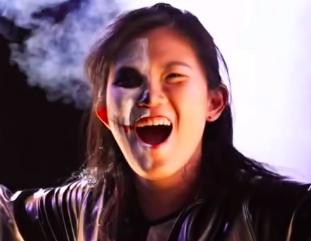
At Pandemonium Pro, the first show of the week, she walked out and heard chants. Her name, her character name Skelly, the skull-faced version of herself she has developed through years of elaborate face paint coming from people she had never seen before.
“I was like, Shit! Someone knows me. They were shouting and shit. I was like, hell yeah.”
At Big Time Wrestling two days later, she had been booked for a singles match against Viva Van. Our favourite Skelly met her at Toki Joshi in the previous May, but they didn’t share a ring then.
Triple threat. The third person: Shotzi Blackheart, formerly of WWE and now operating as an indie god in her own right.
“This freaking nobody got in the ring with AEW star Viva Van Fann and ex-WWE Shotzi. What the fuck is life.”
At WrestleCon, wandering around waiting for her friend Viva, someone in the crowd shouted Skelly. Alexis thought she’d misheard it because she didn’t have her face paint on and was genuinely surprised when people recognised her.
“I turned around and I was like, oh shit, so you’re calling me. It’s like I wasn’t like illusion or something.”
One person recognising her was enough to make the week feel different. She is the kind of person who knows exactly how much it costs to be seen and does not take it for granted when it happens.
At the time of this conversation (May 2026), she is in Paris, one stop into a circuit that runs: Singapore → Las Vegas → Lyon → London → Seoul → Singapore. Five countries. Approximately twelve matches. One month.
The Lyon show was the night before. The London show and her UK debut, only about six years later than she originally planned, is the night after. She has packed primarily jeans and is very cold.
“It’s eleven degrees and it feels like six. I should have bought my winter gear. I’m bones and belly and fat. I need layers.”
She is also, she mentions without excessive drama, quite broke. The Disney cruise she has booked for after she gets home is not helping. She chose it anyway.
“Whatever opportunities you get, just go for them. Money can always be earned back. But if you miss these opportunities, I would hate myself so much.”
She quit her full-time job last year. For a long time she had been managing the wrestling schedule by banking extra hours at work and then using accumulated paid time off for bookings, but the arithmetic of that eventually stopped working for her mental health. Last year she did twenty-two shows while holding down that job and at one point was working two jobs alongside the wrestling. The number surprised even her when she counted it up.
“I put down how many shows I did last year and I was like, Shit. Twenty-two matches. That’s kind of crazy.”
She made the call to quit. To bet on herself, at least for the first half of the year, and see what the wrestling alone could build. January came in with four bookings. March brought three more. This month is already tracking toward eighteen matches total for the year, and it is not yet June.
She does not frame this as brave. She frames it as a calculation she had to make.
She is not conventionally beautiful by the standards wrestling tends to apply to women. She knows this and says it directly, without apparent self-pity: she cannot compete on that axis with many of the women getting attention in the industry right now, so she has found different axes.
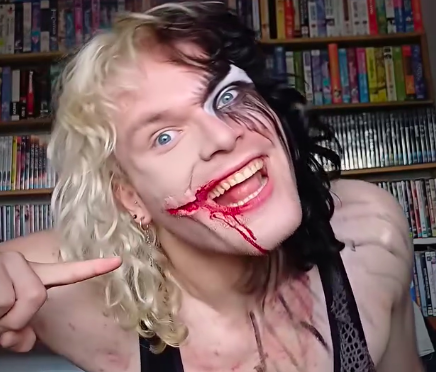
The face paint, the elaborate skull work, the Skelly character is one. It differentiates her. It also provides the Clark Kent effect: fans at WrestleCon recognised her from the face paint, not from her face, which means walking around without it is its own kind of anonymity. She finds this delightful.
The hustle is another. She designs all her own merch. She has a Cartel shop and a Pro Wrestling Tees store for the US market. She makes country-specific stickers, each one featuring local alcohol, and has a Shoey planned for the next time she makes it to Australia. She produces acrylic keychains in formats more unusual than the standard: a shaker keychain, a bottle opener on the keys. Her trading cards came back from the supplier as full plastic hotel-keycard style with engraved 3D pop-out details instead of the cardboard she expected.
“It kind of fucked me up for my future trading cards because now I need to pop to these standards.”
She networks everywhere she goes and builds relationships that then become bookings. The Lyon show came through a friend she met in Korea. The UK booking came through someone who connected her with Fist Club. The Vegas week came together through Viva and a network of people who had watched her work across Asia and remembered it.
This is not luck. It is a decade of treating every interaction as an investment.
There is a frustration underneath all of this that she names without bitterness but also without pretending it isn’t there.
In wrestling, she says, the new thing always gets the push. The shiny new toy arrives and everyone pivots. Meanwhile, she has been out here in Singapore, in Thailand, in China, in the Philippines, in Korea, in Japan, in Australia, in France, in the United Kingdom, in Las Vegas and working consistently for over a decade, building something real, and the industry doesn’t always notice.
“You feel unseen. Like hidden away when the shiny new toy comes up and everyone’s just raving about them. And you’re out here hustling, putting in the work, and then someone just comes in and gets the fifteen minutes of fame.”
She pulls up a fan post on her phone near the end of the conversation. Someone has noted that Shotzi is the hardest working professional wrestler of 2026 so far and that Alexis Lee is close behind, alongside Miyu Yamashita from Tokyo Joshi Pro Wrestling.
“The fact that fans kind of follow my journey and compare me alongside these huge names is insane.”
She says this with genuine surprise, which is either the most charming or the most exasperating thing about her depending on your patience for talented people who chronically underestimate themselves. But it is real. She has genuinely built something, genuinely carved out space for herself across multiple markets and multiple continents, genuinely earned a reputation that precedes her into rooms she has never been in before and she still frames herself as a nobody from Singapore who got lucky with her networking.
She is not nobody from Singapore. She is one of the more internationally active wrestlers operating right now, the hardest working person in a scene most of the world doesn’t know exists, running a circuit that makes most working indie wrestlers look stationary. She just happens to do it without a large company’s promotional apparatus behind her.
That gap that’s between what she has actually built, and how visible it is, is the central tension of her career.
“When fans post stuff and recognise my hard work? That’s when everything just makes sense for me.”
When asked what advice she would give her younger self, she pauses longer than usual.
“Things happen for a reason. You come out strong at the end of it. There’s going to be a lot of heartbreaks and heartaches along the way. You’re going to be burned from both ends. But you’re going to go through all the pain in order to feel a lot more accomplished when the good things start rolling in.”
She is careful about the specifics, but she refers to the Speaking Out movement (the wave of abuse allegations that swept through wrestling globally in 2020) and her own experience of the reckoning it brought to the Southeast Asian scene. The specific irony is not lost on her: she got into wrestling to escape bullying. She arrived in the industry and found it waiting for her in a different form.
“I went through bullying in school, then I get bullied in wrestling. It’s a thing.”
She got through it. And what she found on the other side of it was not just her own recovery, but the knowledge that going through it publicly meant the women who came after her in the region would have a clearer path.
“If I didn’t go through that, my girls would probably have to go through that. And that doesn’t sit right by me. So it’s great. Speaking Out was great. The experience for me was not great.”
She was the sacrificial lamb, she says. She frames this without heroism, just matter-of-factly. The way you talk about something that happened and had a cost. And also had a point.
“That’s how I had to grow up. Stand up for my girls when I couldn’t stand up for myself.”
She does not know, she says honestly, if she has made it. The word feels unstable in her hands. She has accomplished so much: years of international bookings, a WrestleMania week with six shows, a triple threat with AEW and ex-WWE talent. However, she still finds herself surprised when people know who she is.
The goal that feels most immediate is simple: she wants to keep doing this, keep building, and build a good life alongside it. Her partner is supportive in a way that previous relationships were not. They’re someone who says go be awesome and means it, who doesn’t require the wrestling to be diminished to make room for everything else.
They are planning to get married eventually. Queer weddings are not legally recognised in Singapore, so it will be a destination affair. She has also informed her partner that she would like to run a wrestling show the day after the wedding, on the grounds that she will have a venue and a guest list full of wrestlers, and it would be wasteful not to.
“If my face gets hit, it’s after the wedding photos are taken. I don’t need a swollen eye on my wedding day. I need it after my wedding day.”
Her partner, to her credit, said yes.
And she’s still going.
“I just want to keep doing this and see where it goes.”
Wherever that is, one thing’s certain:
She won’t get there quietly.
Alexis Lee is a Singapore-based professional wrestler who competes across Asia, Australia, the United States, and Europe. She is Asia’s favourite Skelly. She has a merch table, a Cartel shop, and she is very cold in Paris. She is going to wrestle in London tomorrow.
If you've read this far, please consider buying me a coffee! It's really expensive here in Melbourne.
comments powered by Disqus